Two Weeks in Ancient Egypt: The Complete Giza to Abu Simbel Itinerary
Egypt is the rare destination where the classic route really is the right route. The monuments that everyone photographs are also, by any serious measure, the most important ones, and they happen to line up along a single river in a sequence that reads north to south like a chronology. Two weeks is enough to do it properly. Ten days is a forced march; three weeks allows time for oases and Sinai.
What follows is that fortnight, sequenced, with the practical spine underneath it: ticket types, the Luxor Pass arithmetic, photography permits, and which famous tombs are shut. Egypt’s ancient core is covered by three World Heritage properties, all inscribed in 1979, and the itinerary below is essentially a tour of them: Memphis and its Necropolis running from Giza to Dahshur, Ancient Thebes with its Necropolis at Luxor, and the Nubian Monuments from Abu Simbel to Philae.
Days 1 to 3: Cairo, Giza and the Grand Egyptian Museum
Give Cairo three nights at the start, not one. The Giza plateau changed shape for visitors in the last two years and the museum situation changed completely.
The Grand Egyptian Museum was fully inaugurated on 1 November 2025, and the headline is the Tutankhamun galleries: all 5,398 objects from the tomb displayed together for the first time since Howard Carter cleared it in 1922. Nothing else in the world holds a single burial assemblage at that scale. The ticket is now one all-inclusive price covering every gallery, the Tutankhamun rooms and the Khufu solar boat pavilion, running around EGP 1,450 to 1,590 for a foreign adult at the time of writing. Book online, go at opening, and give it five hours minimum. The museum plans for 15,000 to 20,000 visitors a day and the grand staircase bottlenecks by mid-morning.
Do the museum before the pyramids, not after. The plateau is stone and geometry, and it means far more once the objects that came out of it are in your head.
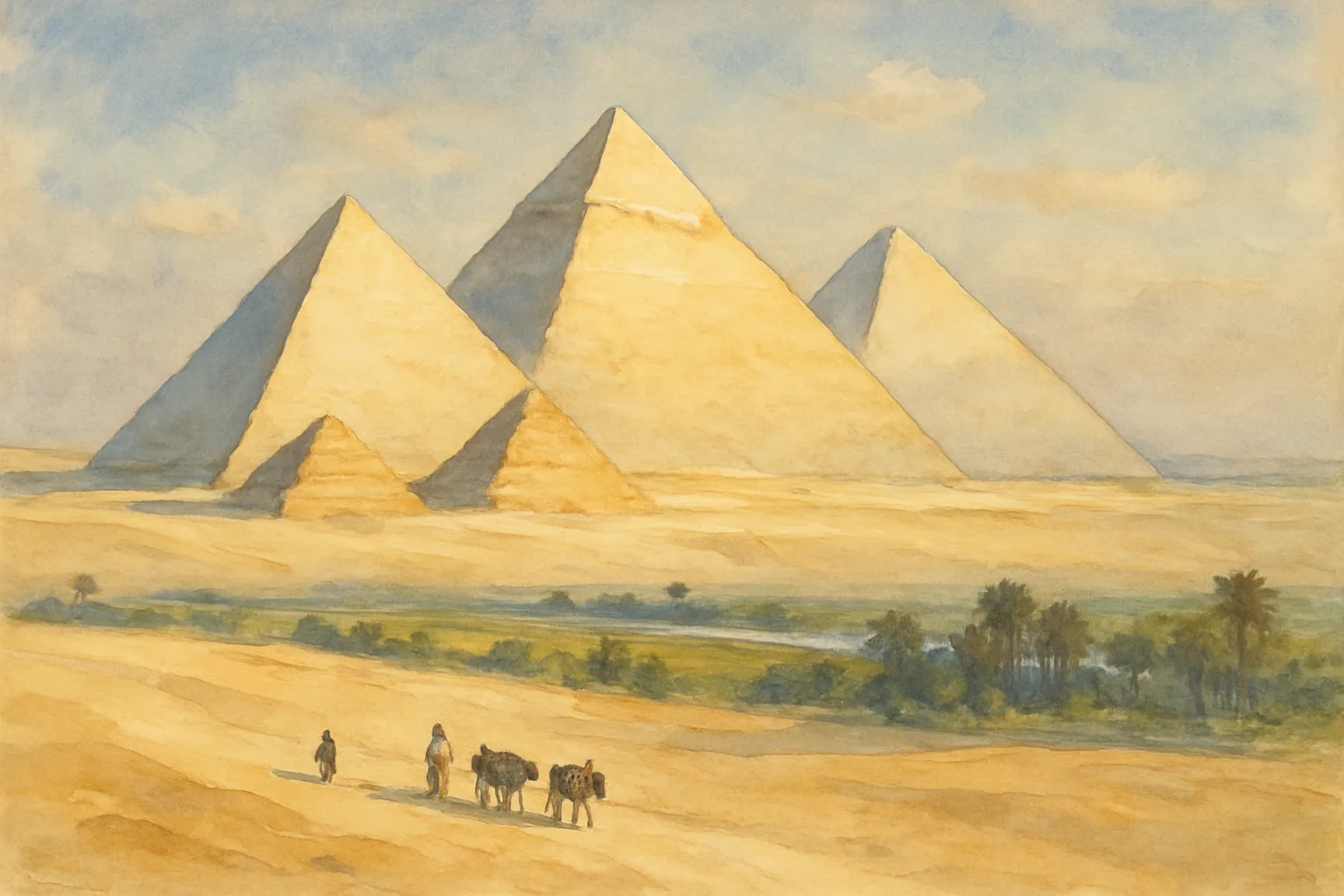
At Giza itself, the access rules are new and catch people out. The main entrance moved to a gate on the Fayoum Highway, private cars and tour coaches are no longer permitted onto the plateau, and you move between the pyramids, the panorama point and the Sphinx on electric shuttles. General site admission runs about EGP 700 for an adult. Going inside the Great Pyramid requires a separate ticket, currently EGP 1,000, and what you get for it is a hot, low, bare granite chamber at the top of a cramped ascent. Buy it if the engineering fascinates you. Skip it if you are claustrophobic, and consider the Red Pyramid at Dahshur instead, where the interior is nearly as impressive and the queue is nonexistent. The official site currently lists plateau hours as 8:00 a.m. to 4:00 p.m.; confirm hours before visiting because schedules can change.
Day 3 or 4: Saqqara and Dahshur, the older pyramids
This is the day most first-timers cut, and it is the day that makes the trip make sense. Giza is the peak of a tradition. Saqqara and Dahshur are how Egypt got there.
Saqqara holds the Step Pyramid of Djoser, the oldest large stone building on earth, and it is also the most productive dig in the country right now. In July 2026 the Supreme Council of Antiquities announced three rock-cut New Kingdom tombs in the Bubasteion necropolis, dating between roughly 1550 and 1070 BC. One belongs to an official named Mentuhotep, shown with his mother Eihotep and titled Hereditary Prince, Mayor and Royal Seal Bearer. Another belongs to Paremwia, also called Samut, whose title was Great Merchant of the Estate of Ptah. The third, poorly preserved, records the return of a military commander from northern Syria, which is a small line of text doing large historical work on Egypt’s reach into the Near East.
Dahshur, half an hour further south, gives you Sneferu’s Bent Pyramid and Red Pyramid, the failed experiment and the correction, standing within sight of each other. It is also where a 2026 study by Zeinab Hashesh of Beni Suef University re-examined six skeletons buried beneath the pyramids around 4,000 years ago, four of them daughters of Amenemhat II. The bones of Princesses Ita and Itaweret carry healed injuries and the muscle attachments of repeated archery practice, which suggests the bows and maces recorded in their nineteenth-century excavation reports were used equipment rather than symbolic grave goods.
Both sites are quiet, hot and largely shadeless. Go early, bring water, and expect uneven sand underfoot throughout.
Days 4 to 5: Getting south to Luxor
Two honest options. The overnight sleeper train from Giza station takes about ten hours in a two-berth cabin, saves a hotel night, and delivers you to Luxor at breakfast. It is not luxurious and the berths are narrow, but it is a genuine experience and it protects a day. The flight takes an hour, costs less than most people expect, and is the right call if you sleep badly on trains or are travelling with children. Book either well ahead in the December to February peak.
Days 5 to 8: Luxor, split east and west
The single most common Luxor mistake is trying to do both banks in one day. Do not. The east bank temples and the west bank necropolis each deserve a dedicated morning, and the heat makes afternoons largely useless from April onward.
East bank. Karnak first, and go at opening. It is the largest religious complex ever built and the Hypostyle Hall’s 134 columns are the reason people fall for Egypt. Luxor Temple is best saved for after dark, when it is floodlit and half empty.
West bank. The Valley of the Kings, Hatshepsut’s terraced temple at Deir el-Bahari, and the Colossi of Memnon are the standard circuit. Standard valley admission is around EGP 600 and includes three tombs from the rotating open list, which changes for conservation reasons, so you cannot reliably plan around a specific tomb. Premium tombs are sold separately: Seti I at roughly EGP 2,000, Tutankhamun at EGP 700, Ramesses V and VI at EGP 220. Seti I is the finest painted tomb in Egypt and worth the money. Tutankhamun’s is small and plain, and the objects that made it famous are all in Cairo now.
Give the west bank a second morning if you can. The Tombs of the Nobles and the workers’ village at Deir el-Medina show daily life rather than funerary machinery, and they are almost empty. Note that Nefertari’s tomb (QV66) in the Valley of the Queens has been closed for conservation since 2024 with no announced reopening date, which matters for the pass maths below.
The Luxor Pass arithmetic
The Luxor Pass covers all east and west bank sites for five days. The standard version runs about $130 for an adult and $70 for under-30s with a student card. The premium version, around $250 and $130, adds the tombs of Seti I and Nefertari.
Work it honestly. The standard pass pays off if you are visiting four or more ticketed sites, which almost anyone on a three-day Luxor stop will be. The premium pass historically justified itself on two tombs, and with Nefertari shut it is now buying you Seti I alone. If Seti I is the only premium tomb you want, a standard pass plus a single Seti I ticket usually costs less. Passes must be bought in person with a passport and one passport photo, in US dollars or euros cash, at the offices near Karnak or on the west bank.
Days 8 to 11: The river, Edfu and Kom Ombo
The stretch between Luxor and Aswan is the one leg where the transport is the attraction. Two temples sit on it, and both are best reached by water.
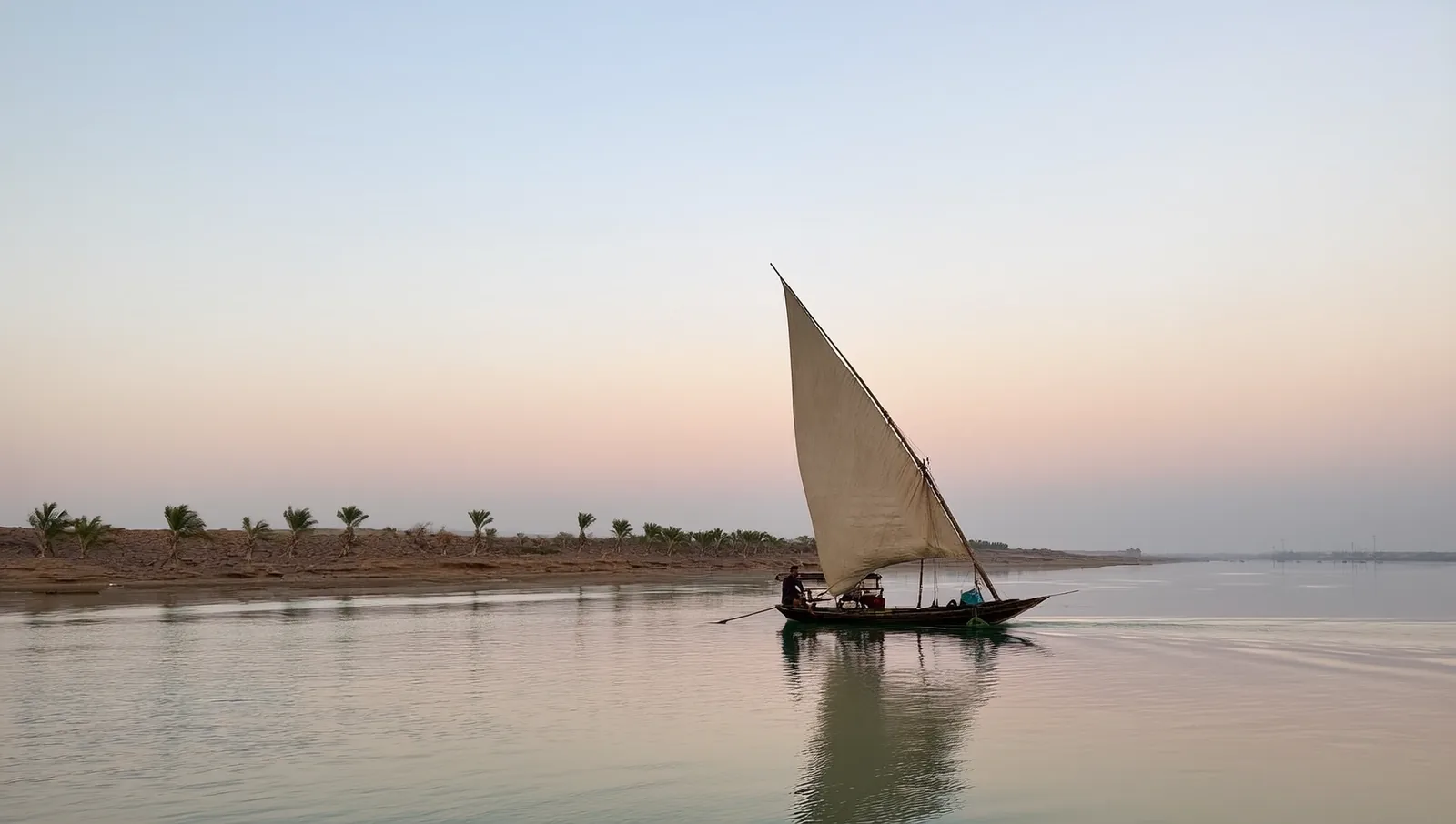
Edfu is the Temple of Horus, the most completely preserved major temple in Egypt, roof and all, because it spent centuries buried in silt and sand. Kom Ombo is the strange one: a symmetrical double temple with two parallel sanctuaries, one for the crocodile god Sobek and one for Haroeris, plus a small museum of mummified crocodiles pulled from the surrounding sands.
On the boat itself, the choice is between a cruise ship (three to five nights, 60 to 150 cabins, fixed schedule, buffet, docks in convoy at each temple) and a dahabiya (a small sailing houseboat, six to twelve cabins, moors at sandbanks and villages the big ships pass). The dahabiya costs more per night and takes longer. It is also the only version of this trip where the Nile is a river rather than a corridor. If your budget stretches once on this itinerary, stretch it here.
Days 11 to 14: Aswan, Philae and the Abu Simbel dawn
Aswan is the softest stop on the route and a good place to lose a day deliberately. The Unfinished Obelisk in the northern granite quarries is a quarrying lesson rather than a monument: 42 metres of stone still attached to bedrock, abandoned when it cracked.
Philae, the Temple of Isis, is reached by motorboat and is not where it was built. When the High Dam flooded its original island, UNESCO’s Nubia campaign of the 1960s cut the complex into more than 40,000 blocks and rebuilt it on higher Agilkia Island nearby. It is the same rescue operation that saved Abu Simbel, and it is the reason the whole stretch is inscribed as the Nubian Monuments from Abu Simbel to Philae. When you read a UNESCO plaque here, you are reading about the campaign that effectively created the modern World Heritage system, as our guide to how the list works sets out.
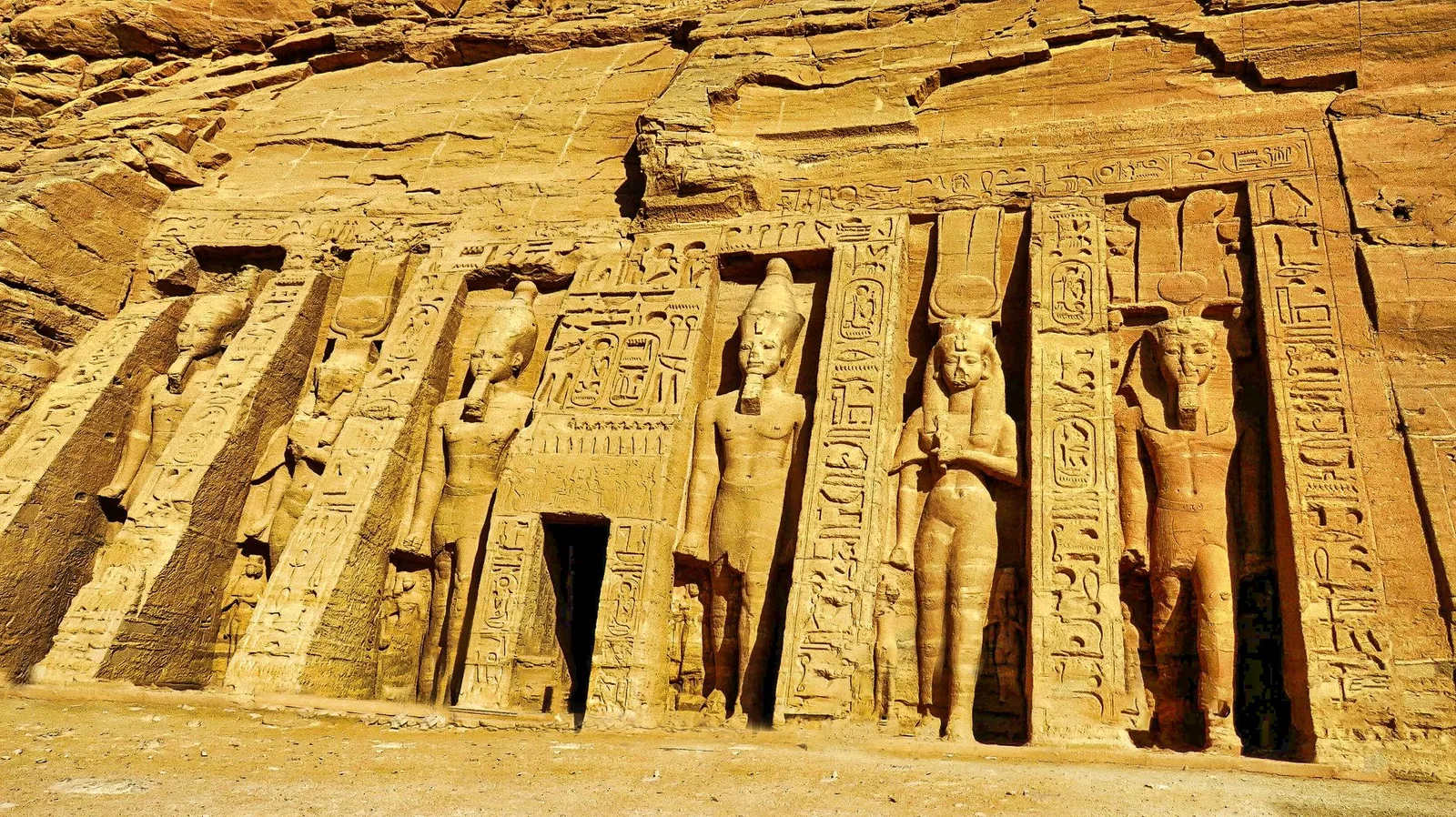
Abu Simbel is 280 km south of Aswan and there are two ways to do it. The road convoy leaves Aswan around 3:30 a.m. with a second run near 11am, takes three to three and a half hours each way across open desert, and costs anywhere from $20 in a shared minibus to $150 for a private car. The EgyptAir flight takes about 45 minutes and runs roughly $80 to $120 return, which buys back six hours of your day. Either way, aim to be at the temples for the first light, when the four seated colossi of Ramesses II take the sun head-on and the crowds have not arrived.
Two dates change the calculation. On 22 February and 22 October, sunlight penetrates 60 metres into the Great Temple’s sanctuary and lights three of the four seated gods, Ramesses, Amun and Ra, leaving Ptah in shadow as a god of the underworld should be. The alignment lasts about twenty minutes. Because the temple was moved in the 1960s rescue, the effect shifted by roughly a day, so crowds gather on the 21st as well. If you want to see it, book accommodation in Abu Simbel village months ahead and expect the site to be packed.
The practical spine
Season. November to March, without much argument. Luxor and Aswan run past 40°C from May to September with no shade at any site. If you must travel in summer, be at every gate at opening and treat afternoons as indoor time.
Photography. Phone photography is free at most open sites and tombs, with Tutankhamun’s tomb a notable exception. A DSLR or any tripod requires a paid permit bought at the ticket office, commonly around EGP 300 in the Valley of the Kings. Flash is banned everywhere pigment survives, and the guards enforce it.
Guide or not. Cairo and Luxor genuinely reward a licensed Egyptologist guide, because the wall scenes are legible only if someone reads them for you. Aswan and the Nile leg are fine self-guided. Book guides through your hotel or a registered agency rather than at the gate.
Sites versus museums. Egypt splits its treasure the way Mexico splits Oaxaca’s, where the great Zapotec capital of Monte Alban keeps the architecture while the Tomb 7 gold sits in a museum in town. Expect the same here. The tombs keep the paintings; Cairo keeps the objects, and an afternoon in a gallery is not a consolation prize.
What this route leaves out. Plenty, deliberately. Alexandria and the Delta are where much of the current news is, including a Late Period and Greco-Roman funerary complex found at Tell Quesna in July 2026 with more than 500 faience ushabti figurines and imported Rhodian pottery, and about two dozen gold foil tongues excavated at Marina el-Alamein, placed in the mouths of the dead so they could speak before Osiris. Neither site is set up for casual visits. If you have a third week, the better addition is the Western Desert oasis circuit, which is genuinely visitable and almost empty.
Further reading (sources)
- Archaeology Magazine on the three New Kingdom tombs excavated at Saqqara’s Bubasteion necropolis
- Archaeology Magazine for the study of archery injuries in royal women buried at Dahshur
- Smithsonian Magazine reports the gold tongues found at Marina el-Alamein near Alexandria
- UNESCO World Heritage Centre keeps the inscription record for Memphis and its pyramid fields
- UNESCO World Heritage Centre also holds the record for the Nubian Monuments from Abu Simbel to Philae
Feature photo: “Breathtaking landscape of the Giza Pyramids under a clear blue sky in Cairo, Egypt.” by Michelle Chadwick on Pexels.