Crete's Six Minoan Palaces Joined the UNESCO World Heritage List: A Visitor's Guide
Crete has always pulled travelers in with its beaches and mountains, but a quieter headline now puts the island’s deepest history front and center. On July 12, 2025, the UNESCO World Heritage Committee voted unanimously to inscribe the Minoan Palatial Centers, six Bronze Age palaces scattered across Crete, onto the World Heritage List. In late May 2026, Crete celebrated the milestone at home, when Greek Culture Minister Lina Mendoni unveiled a commemorative plaque at Knossos alongside UNESCO delegates and regional leaders. For anyone planning a trip, the new status is both an invitation and a nudge to go thoughtfully.
These are not six versions of the same ruin. Together they tell the story of Europe’s first advanced civilization, the Minoans, who flourished on Crete from roughly 2800 to 1100 BC. The great palaces rose around 1900 BC and were rebuilt grander after about 1700 BC, serving as the administrative, economic, and religious hearts of their world.
What UNESCO recognized, and when
The inscription happened at the 47th session of the World Heritage Committee in Paris, the culmination of a nomination dossier Greece had been preparing since 2019. UNESCO accepted the sites under four of the convention’s six cultural criteria, citing their Outstanding Universal Value as evidence of early European urbanization, sophisticated ancient economies built on farming and seaborne trade, and, remarkably, the birth of European writing. Two of the world’s oldest scripts, Cretan Hieroglyphic and Linear A, were invented on Crete at the dawn of the second millennium BC. Linear A has still not been deciphered.
A World Heritage listing is not just a trophy. As Mendoni put it at the ceremony, it is a binding commitment to protect the sites for generations to come, one that legally obliges the state, the region, and local communities alike.
If you like to plan trips around fresh inscriptions, it pays to follow the committee’s annual meetings. The 2025 vote that honored Crete was followed by the 48th session in Busan in 2026, where another slate of sites joined the List. Newly listed places are often at their calmest in the short window before timed tickets and tour buses arrive in force.
The six palaces, from west to east
Crete is a long island, about 260 km end to end, and the six palaces are spread right across it. Here is the lay of the land.
Kydonia sits beneath the old town of Chania in the far west. It is the hardest of the six to actually see, because the Minoan city lies under the modern streets, with digs confined to plots such as the Kasteli hill. Visit the local archaeological collection for context, then enjoy Chania’s Venetian harbor.
Zominthos is the surprise on the list. High on the slopes of Mount Ida (Psiloritis) at around 1,200 meters, it is one of the most recently excavated Minoan centers and has rewritten ideas about how far into the mountains this culture reached. It is a working excavation, so access can be seasonal or restricted. Check ahead before driving up.
Knossos, just south of Heraklion, is the giant. The largest and most elaborate of the palaces, it is bound to the myth of King Minos and the Labyrinth, and it is the one site almost every visitor sees. It is also the most reconstructed, which deserves its own section below.
Malia, on the north coast east of Heraklion, is flatter, quieter, and easy to read. Its symmetrical layout and rows of storage magazines make the palace economy tangible. The gold Malia bee pendant, now in Heraklion, was found close by.
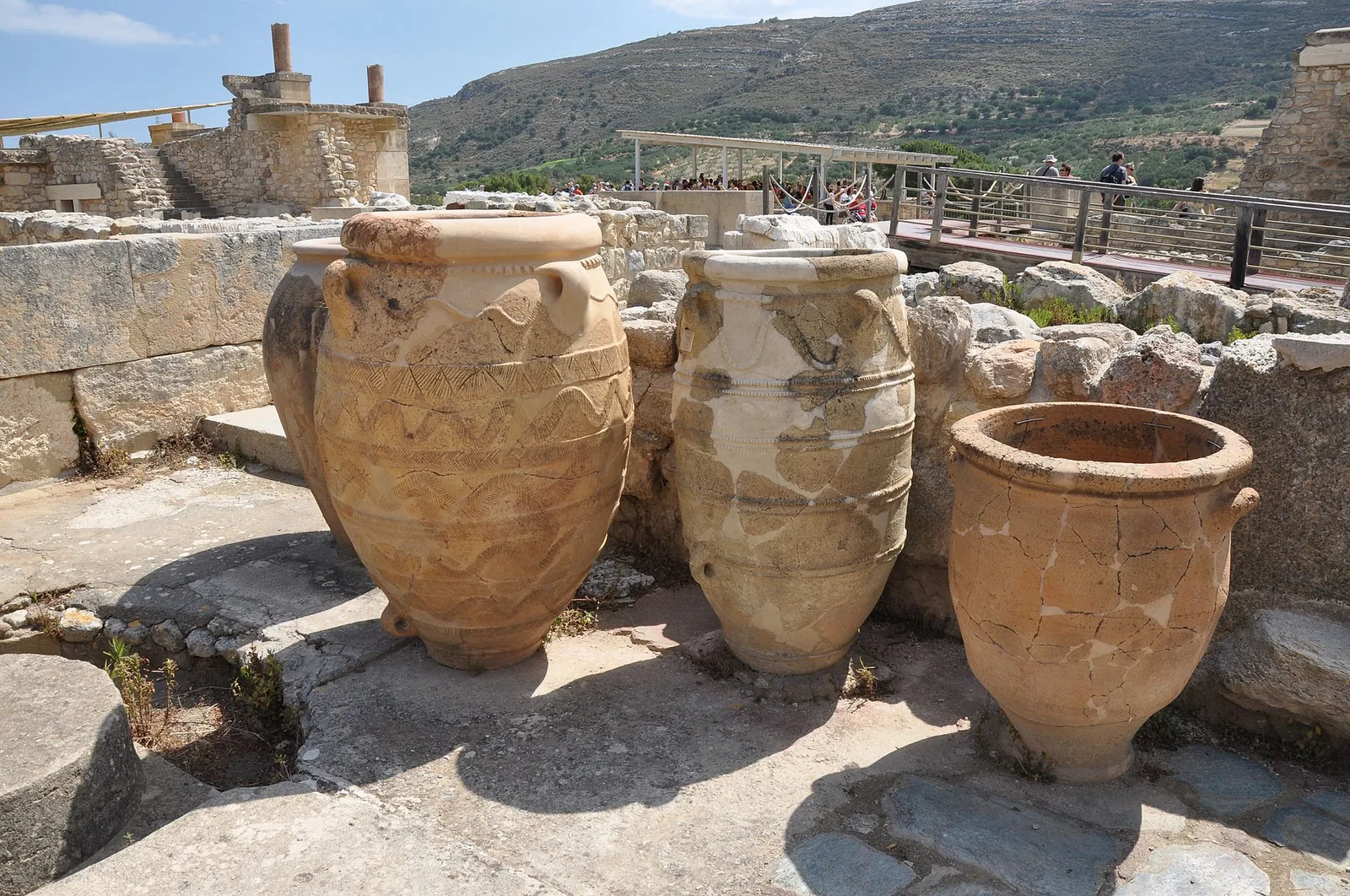
Phaistos commands a ridge above the green Messara plain in the south, with Mount Ida on the horizon. Left largely as excavated, it is the atmospheric counterpoint to Knossos. This is where the famous Phaistos Disc, a fired clay disc stamped with still-undeciphered symbols, came to light.
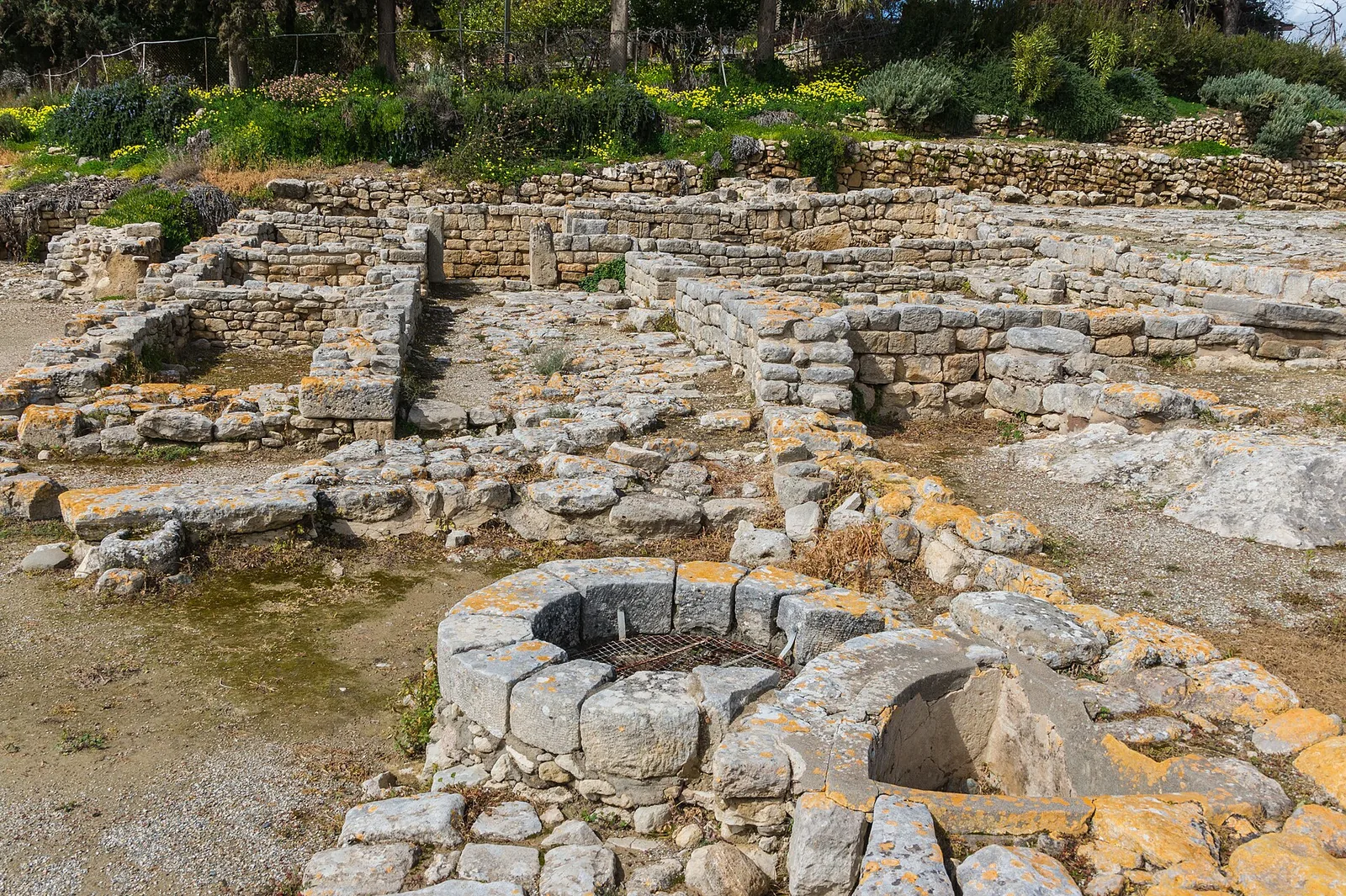
Zakros, at the wild eastern tip, was a harbor palace that controlled sea routes toward Egypt and the Levant. Reaching it is a commitment, but the drive pairs beautifully with the Gorge of the Dead hike and the palm beach at Vai.
What survives at Knossos, and what Arthur Evans rebuilt
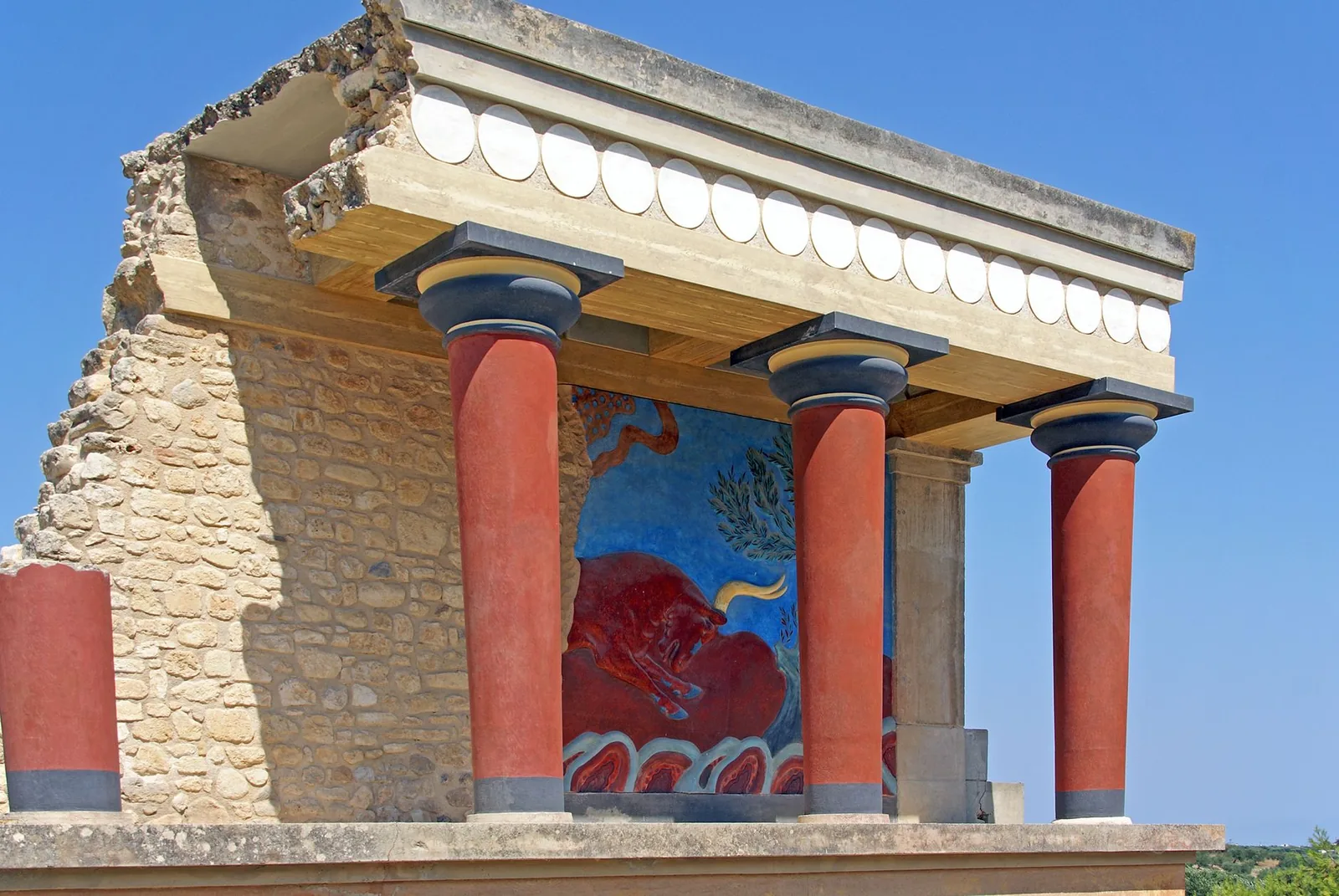
No site on Crete sparks more debate than Knossos, and the reason is one man. The British archaeologist Sir Arthur Evans began digging here in 1900, named the civilization “Minoan” after King Minos, and then did something few archaeologists of his era dared. He rebuilt. Using concrete, he raised walls and staircases, restored the distinctive downward-tapering red and black columns, and installed bold copies of the frescoes.
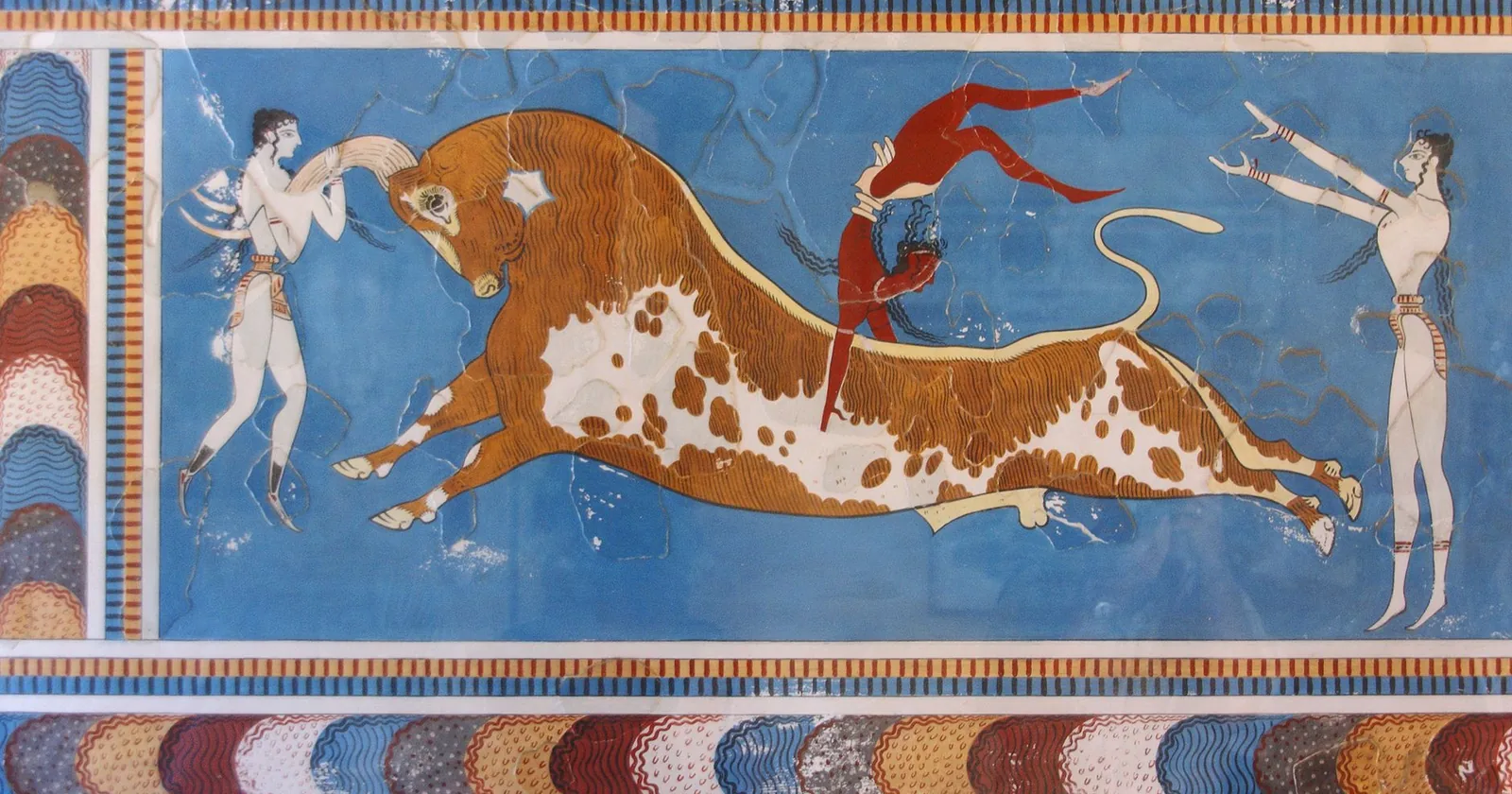
The result is vivid but contested. What you photograph at Knossos, the throne room, the colorful bull-leaping panels, the towering columns, is in large part Evans’s interpretation, shaped by the Art Nouveau taste of the early twentieth century as much as by the evidence in the ground. Most scholars today treat these reconstructions as informed guesses rather than certainties, and some wish the ruins had been left alone.
There is a practical upshot. The original frescoes and the greatest Minoan treasures are not at Knossos at all. They sit a short drive away in the Heraklion Archaeological Museum, where the real bull-leaping fresco, the snake goddess figurines, the Phaistos Disc, and the Zakros rock-crystal jug are displayed. See the palace and the museum together, ideally the museum first, and the ruins will make far more sense. The other five palaces, by contrast, were barely reconstructed, so what you see there is much closer to what the spade uncovered.
Planning a multi-palace island itinerary
You do not need to see all six, and few travelers do. A rental car is close to essential, since public transport between the sites is thin. A sensible plan looks like this:
- Base in Heraklion for Knossos, Malia, and, with a mountain detour, Zominthos. The Heraklion Archaeological Museum anchors this leg.
- Day trip south to Phaistos, easily combined with the nearby Minoan villa at Agia Triada and the Greco-Roman ruins of Gortyna.
- Go east to Zakros only if you have a full day and an appetite for driving, folding in Vai and the Gorge of the Dead.
- Finish in Chania for Kydonia and the west, where the palace is more idea than monument but the city itself is a delight.
Three to five days lets you link Knossos, Heraklion, Phaistos, and Malia without rushing. Adding Zakros and Chania turns the trip into a week-long island traverse.
When to go, and how to beat the Knossos crowds
Spring (April to early June) and autumn (September to October) are ideal: wildflowers and soft light in spring, warm sea and thinner crowds in autumn. High summer is hot and busy, and the open ruins offer almost no shade.
Knossos is the one site that genuinely sells out at peak times. Book your ticket online in advance, and look at the combined Knossos plus Heraklion museum ticket. Arrive at opening or in the last couple of hours of the day to dodge the cruise and tour groups that flood the site mid-morning. This early-bird habit is the same reason it pays to watch which sites earn World Heritage status each year: a fresh listing means a fresh rush.
A note on access. These are ancient sites with uneven ground, steps, and limited facilities. Knossos has some raised walkways but stays hilly, Phaistos and Zakros involve rougher terrain, and Zominthos is a remote mountain site. Travelers with mobility needs are best served by Knossos and the Heraklion museum, the two most manageable stops.
Crete is also investing behind the new status. A 15 million euro Minoan Cultural Route, funded with Greek and European money, is upgrading visitor facilities and crowd management at Knossos and tying the sites together. The island that gave Europe its first palaces is getting ready to show them off properly.
Further reading (sources)
- UNESCO World Heritage Centre on the Minoan Palatial Centres nomination record
- GreekReporter for Crete’s celebration of the inscription
- eKathimerini with the announcement of the six listed Minoan sites
- The Archaeologist on a rundown of the six palaces and where to find them