How the Romans Actually Built It: Pompeii's Frozen Construction Site and the Secret of Roman Concrete
Most of Pompeii shows you the finished city: paved streets worn into ruts, frescoed walls, the forum framing Vesuvius. One corner shows you something far rarer. In Regio IX, the eruption of 79 CE caught a house mid-renovation and froze the building site exactly as the workers left it, with stacks of material, tools set down, and piles of raw lime and volcanic ash still waiting to be mixed. For anyone fascinated by how the Romans actually built, and not just by what they left behind, this is the closest thing we have to pausing a Roman crew at work. It has also handed materials scientists a long-sought clue to why Roman concrete still stands after two thousand years while much of ours crumbles in decades.
A worksite frozen mid-job
Pompeii is mapped into nine regiones, or districts, and Regio IX sits near the city’s center. The excavation that uncovered the construction site is part of the largest new dig at Pompeii in a generation, launched in 2023 by the Archaeological Park of Pompeii. The same campaign has produced a run of headline finds: a cramped bakery where enslaved workers turned the millstones, vivid still-life frescoes, and a small shrine with deep blue walls.
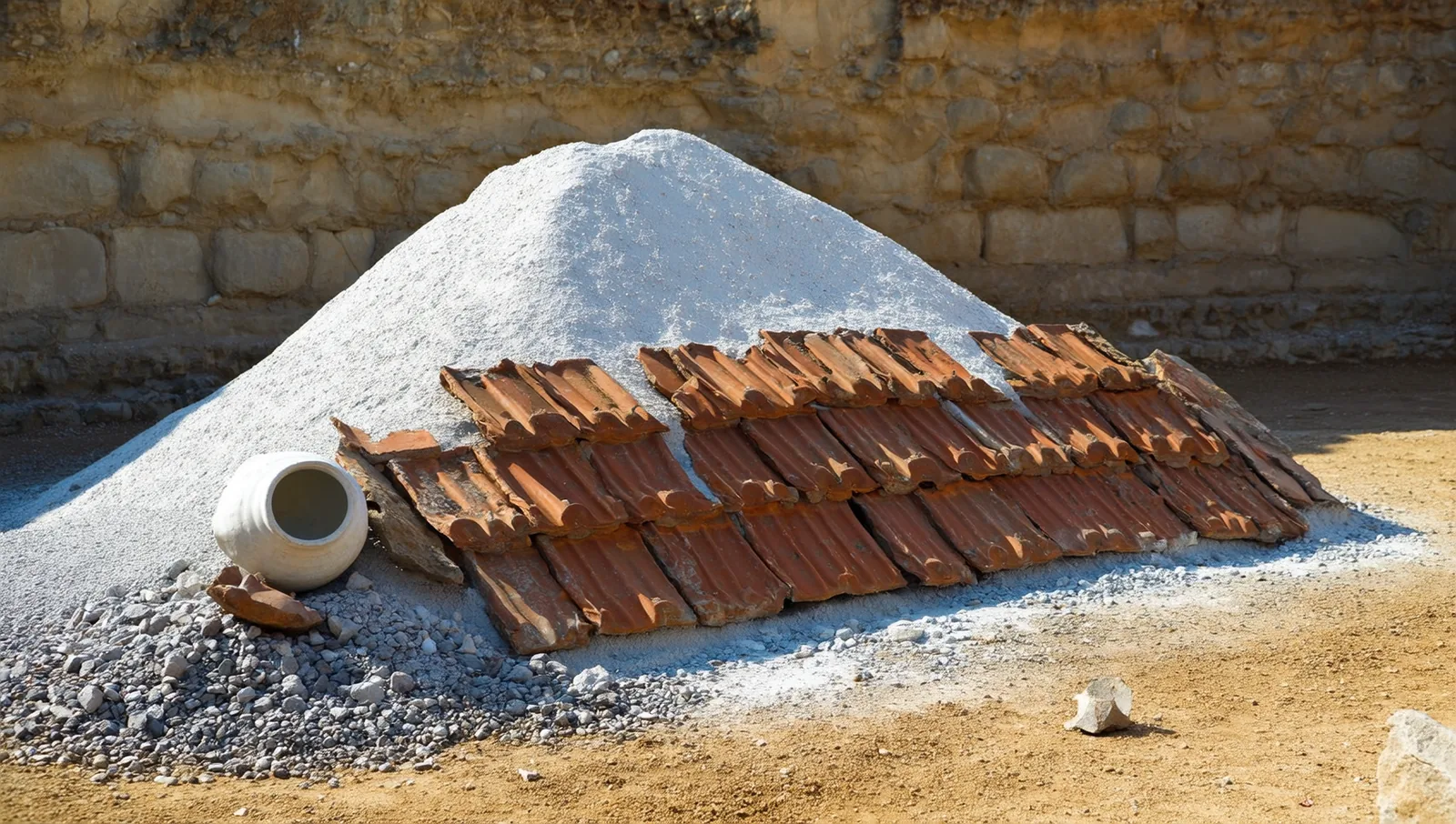
The construction site is quieter but, for an engineering enthusiast, the real prize. Archaeologists found a building paused in the act of being built: walls already finished standing beside walls only partly raised, stacks of roof tiles and worked stone, lead and iron tools, and amphorae cut down and reused to slake lime. Most telling of all were the heaps of dry raw material, lime and volcanic ash, sitting exactly where they had been stockpiled. It is rare to catch any ancient process in motion. Here the volcano fossilized not just people but a method.
That pairing of people and process runs right through the city. In the Garden of the Fugitives, recent CT scanning of one plaster cast revealed a man who died clutching a bag of bronze and silver coins, a small slate, and a set of metal instruments, most likely a doctor fleeing with the tools of his trade. The eruption preserved a surgeon’s last morning and a builder’s unmixed lime pile with the same terrible care.
The secret in the piles: hot-mixed concrete
Roman concrete, opus caementicium, was a simple-sounding recipe with a remarkable result: lime, volcanic ash, water, and a coarse aggregate of rubble and broken stone the Romans called caementa. The ash was the magic ingredient. The best of it came from around Pozzuoli, ancient Puteoli, on the volcanic Bay of Naples, which is why we still call the material pozzolana. Vitruvius and Pliny the Elder both wrote down versions of the recipe, praising the Puteolan dust that, mixed with lime, would set hard even underwater.
What the recipes never quite settled was the exact procedure, and that is what the Regio IX piles answered. Chemical and microstructural analysis of the stockpiles, the finished walls, and the walls still under construction, published in 2025 in the journal Nature Communications, showed that the builders pre-mixed quicklime with dry pozzolan before adding water. This technique, known as hot mixing, sets off an intense exothermic reaction the moment water hits the blend. Because the tools and raw materials were found together, researchers could reconstruct the entire workflow, from binding mortar to coarse aggregate. It is laboratory theory caught red-handed in the field.
Why Roman concrete heals itself
Hot mixing leaves a signature: small white lumps of lime, called lime clasts, scattered through the mortar. For generations these were dismissed as sloppy work, the sign of a poorly mixed batch. In 2023, researchers studying the chemistry argued the opposite, that the clasts are a feature, not a flaw, and the key to the material’s near-magical durability.
The mechanism is a kind of self-healing. When a hairline crack opens and water seeps in, it dissolves calcium from a nearby lime clast. That calcium travels into the crack and recrystallizes as calcium carbonate, sealing the gap and even remineralizing the boundary around the volcanic aggregate. The concrete, in effect, repairs itself. The Pompeii worksite matters here because it shows the dry pre-mixing step that puts those reactive clasts into the mortar in the first place.
This is why a building accident from 79 CE keeps turning up in modern materials-science journals. Detailed studies of Roman concrete, including micron-scale chemical imaging of samples from the Roman town of Privernum, are feeding research into greener, longer-lasting cements that might one day patch their own cracks. A fair word of caution: the science is young and still argued over, and not every claim about Roman durability is settled. But the broad picture, that the Romans stumbled onto a self-maintaining material, is gaining hard evidence. The showpiece of that achievement still stands in Rome: the unreinforced concrete dome of the Pantheon, nearly 43 meters across and almost 1,900 years old, lighter pumice worked into its upper aggregate to ease the load.
Reading a Roman wall on the ground
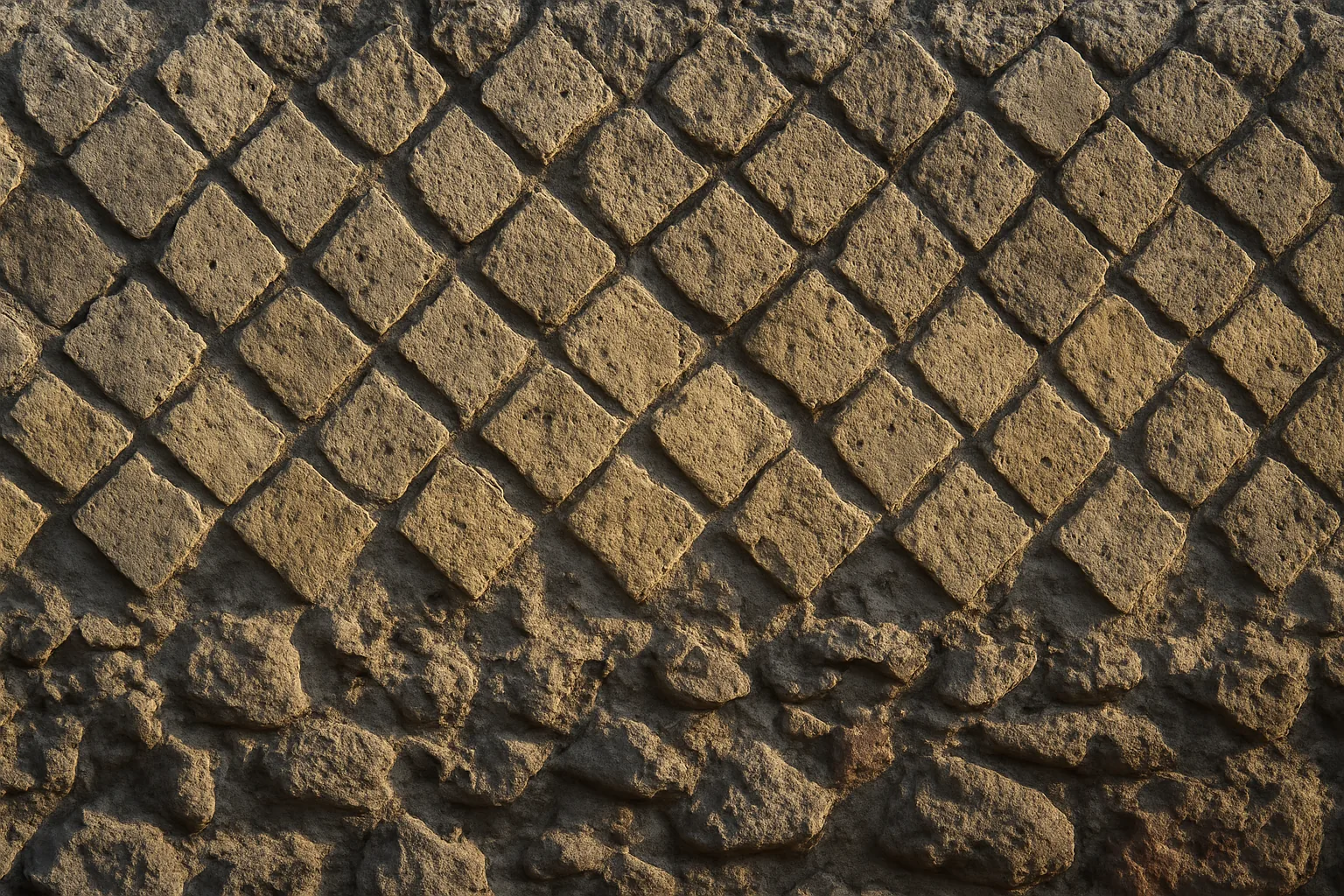
You do not need a lab to see this engineering at Pompeii. You need to know where to look. Wherever a wall has broken open, study the cut: the smooth facing is only a skin over a thick core of mortar and rubble, the concrete doing the structural work. Then read the facing itself. The oldest style, opus incertum, sets irregular small stones into the mortar like a rough mosaic. The neater opus reticulatum, very common across Pompeii, arranges little pyramid-shaped tufa blocks point-inward to make a tidy diamond net. Later walls add courses of brick, opus latericium, often banded with the stonework. Look closely and you will spot broken amphorae and roof tiles recycled straight into the fabric, the ancient world’s version of using whatever was on hand.
This is the same family of engineering you can meet far from Italy. The towering vault of the Roman cold-bath room that survives in Paris, which I cover in my guide to the Roman city beneath Notre-Dame, is built from exactly this lime-and-rubble logic, scaled up to roof a hall.
Visiting Regio IX: what is open and what is roped off
Here is the honest part. Regio IX is an active excavation, which means most of it is a working dig rather than a walk-through attraction. As areas are cleared you can often view the uncovered rooms and the construction site from barriers and walkways, but access shifts as the work moves and sections close at short notice. Treat any specific room as a bonus, not a guarantee, and check the park’s site before you go.
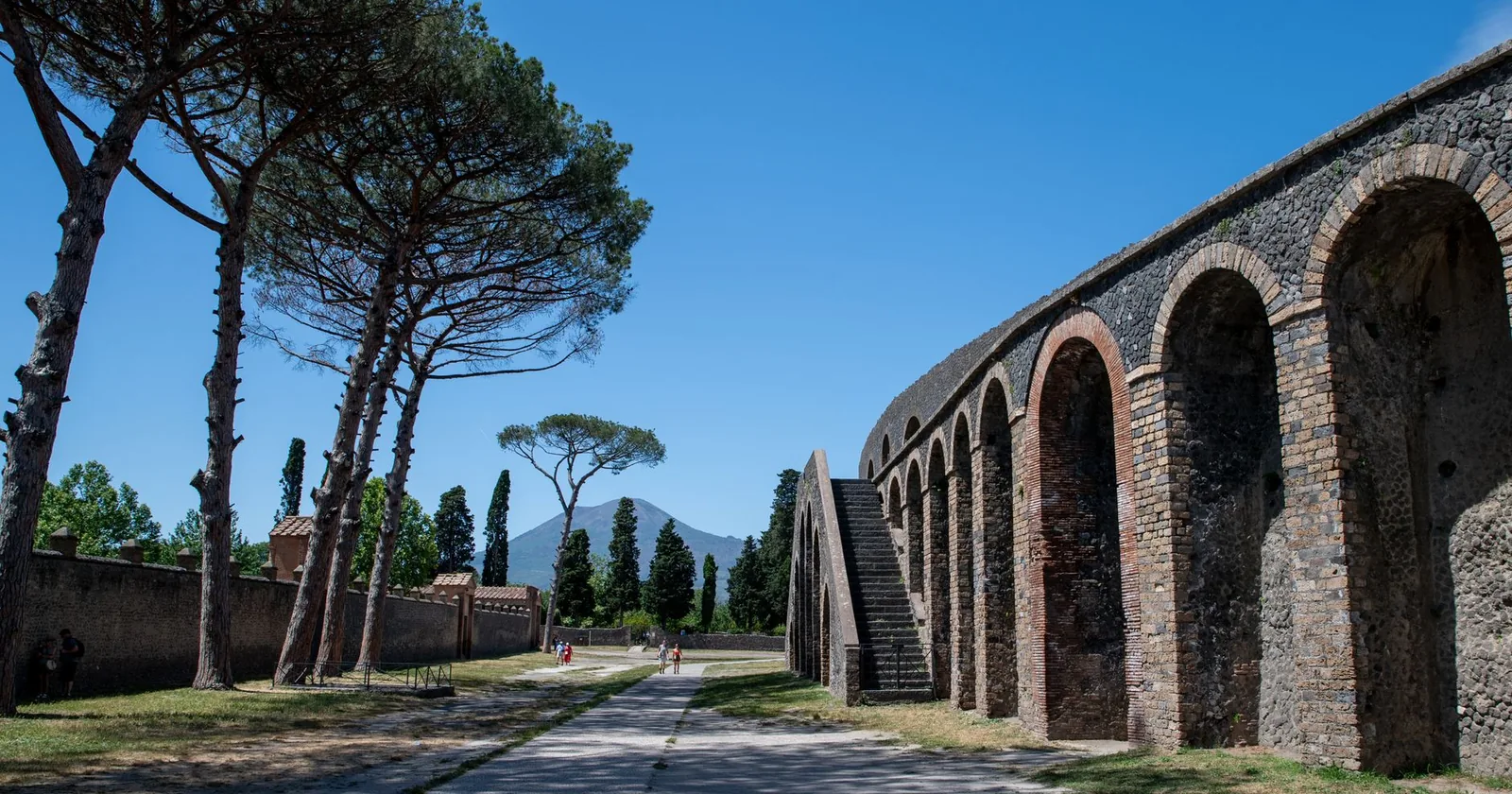
The good news is that the rest of Pompeii, the part most visitors come for, is wide open: the forum, the Stabian baths, the House of the Faun, the great amphitheatre, and the Villa of the Mysteries on the city’s edge. The on-site Antiquarium museum near the Porta Marina entrance displays finds and several of the haunting body casts. Remember that much of Pompeii’s painted art now lives in a museum rather than on the walls, so the ruins give you structure and scale while the colour waits elsewhere. Pompeii has been a UNESCO World Heritage Site since 1997 (jointly with Herculaneum and Torre Annunziata), a status worth watching if you plan trips around the annual World Heritage listings. Book tickets in advance through the official park site; peak-season slots sell out, and skip-the-line entry is worth it on a hot morning.
Getting there, when to go, and what to pair it with
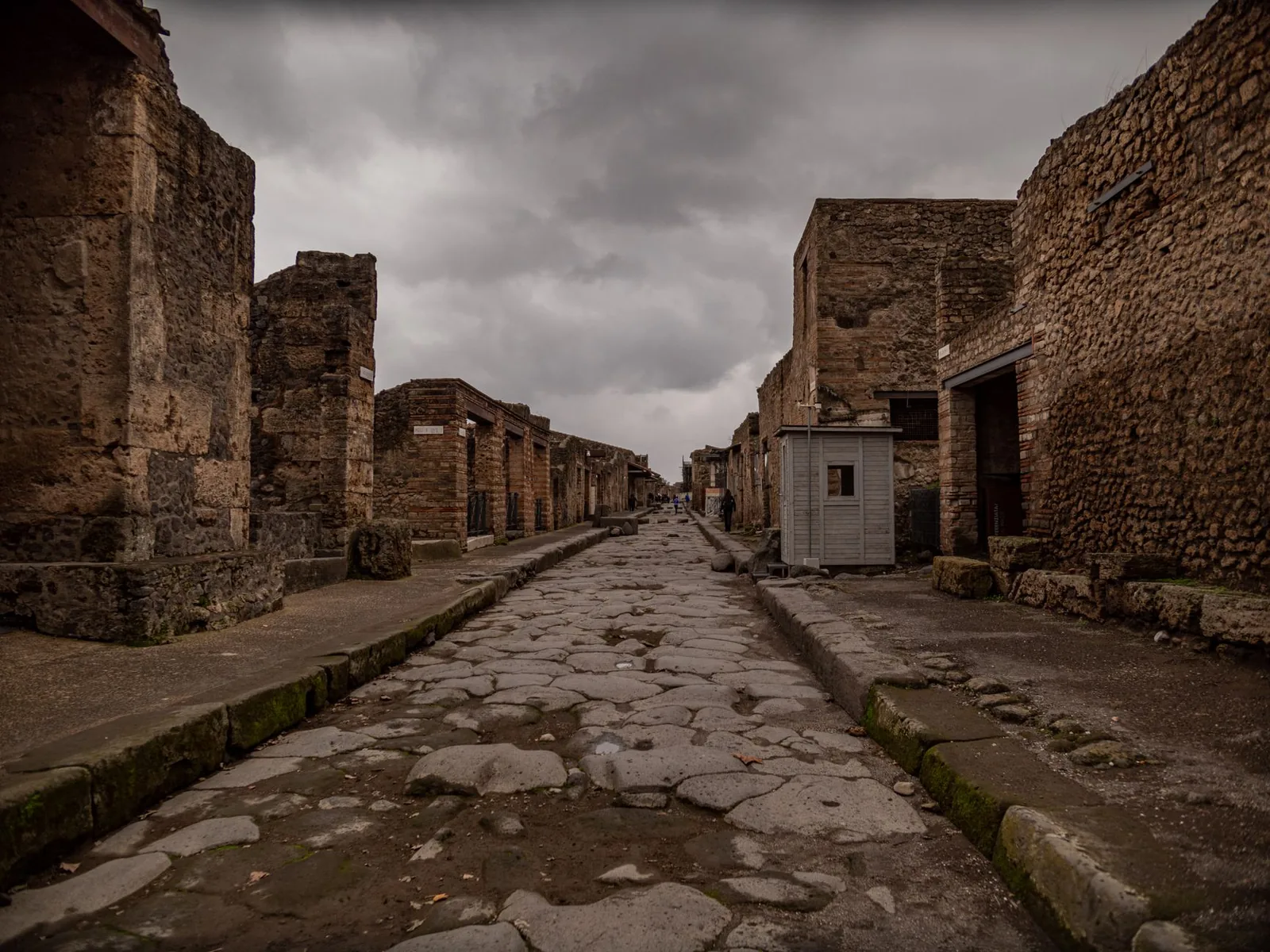
Pompeii is easy to reach from Naples or Sorrento on the Circumvesuviana railway; get off at Pompei Scavi, Villa dei Misteri, which sits right by the western Porta Marina entrance. Mainline trains to the modern town of Pompei put you near the eastern Piazza Anfiteatro entrance instead. Spring and autumn are the kindest seasons; summer bakes the open ruins with almost no shade, so start at opening time and carry water. Wear sturdy shoes, because the ancient paving is uneven, rutted by cartwheels and crossed by raised stepping stones. A marked accessible route, Pompeii for All, threads a step-free path through part of the site, though large stretches remain difficult for wheelchairs and limited mobility.
Give Pompeii a full day, then build the area into a longer ancient itinerary. Nearby Herculaneum is smaller but preserved its upper floors and even wooden furniture; Vesuvius itself can be climbed to the crater rim; and the National Archaeological Museum in Naples holds the finest Pompeian frescoes and mosaics, including the vast Alexander Mosaic. Just as the original frescoes of Knossos hang in a museum rather than on the palace walls, as I describe in the guide to Crete’s Minoan palaces, Pompeii’s masterpieces and its ruins are now two stops on the same trip.
Stand for a moment by that unfinished wall in Regio IX if you can. A finished temple shows you Roman ambition. A half-built wall, with the lime still heaped beside it, shows you Roman method, and it is the same method, lime and ash and rubble, holding up the dome of the Pantheon to this day.
Further reading (sources)
- Nature Communications on the unfinished Pompeian construction site and how Roman concrete was hot-mixed
- Archaeological Park of Pompeii for current visiting information and the Regio IX excavations
- UNESCO World Heritage Centre with the Pompeii, Herculaneum and Torre Annunziata inscription
- PLoS One details micron-scale chemical imaging of ancient Roman concrete from Privernum
- Archaeology reports new scanning that identified a fleeing doctor among Pompeii’s victims
Feature photo by Margo Evardson on Pexels.