The Ultimate Guide to Ancient China: Five Thousand Years in One Itinerary
On 25 July 2026 the World Heritage Committee, sitting in Busan, inscribed the Jingdezhen Handicraft Porcelain Industry Sites and made them China’s 61st World Heritage property. It was the first industrial heritage site China had ever nominated and the first porcelain-themed entry on the list anywhere. From six sites in 1987, the country now sits one property behind Italy at the top of the table.
For a traveler, that number is a problem rather than a boast. Sixty-one properties spread across a landmass the size of Europe, stitched together by domestic flights that cost a day each, is not an itinerary. It is a menu with no prices. What follows is the ancient layer of that menu, arranged as a route rather than a list, with a blunt note at each stop about what survives on the ground and what has been carted off to a provincial museum.
Read the chronology before you book flights
China’s ancient record is not one story but four, and they sit in different provinces.
The Neolithic, roughly 3500 to 1900 BC, is the Yangtze delta and the Yellow River loess, where the earliest walled cities are. The Bronze Age, about 1600 to 256 BC, belongs to Henan and, awkwardly for the standard narrative, to Sichuan. The imperial foundation under Qin and Han, 221 BC to AD 220, is Shaanxi and the corridor running northwest out of it. The Silk Road centuries, Tang and after, are Gansu and Xinjiang.
Pick two of the four. Attempting all of them in a fortnight buys you airports.
Neolithic: Liangzhu and Shimao
Liangzhu, on the northern edge of Hangzhou, is the site that changed the argument about when Chinese civilization begins. Inscribed in 2019, the city dates to around 5,300 years ago, and its case for outstanding universal value rests less on the walls found in 2007 than on the water system found in 2015: eleven dams and dikes, the oldest large hydraulic works known in China and among the oldest anywhere. Archaeologists estimate the earthworks took roughly 4,000 people a decade to build. That implies a state, whatever you choose to call the people who ran it.
Manage expectations at the park. Liangzhu is earth, water and grass, presented as a landscape with reconstructed platforms rather than standing architecture. The jade is the point, and the jade is indoors at the Liangzhu Museum, including the 6.5 kg “King of Cong” pulled from the Fanshan cemetery in 1986. Budget a full day for both. The ruins park runs 9am to 5pm with last entry at 4pm, and admission is 80 yuan.
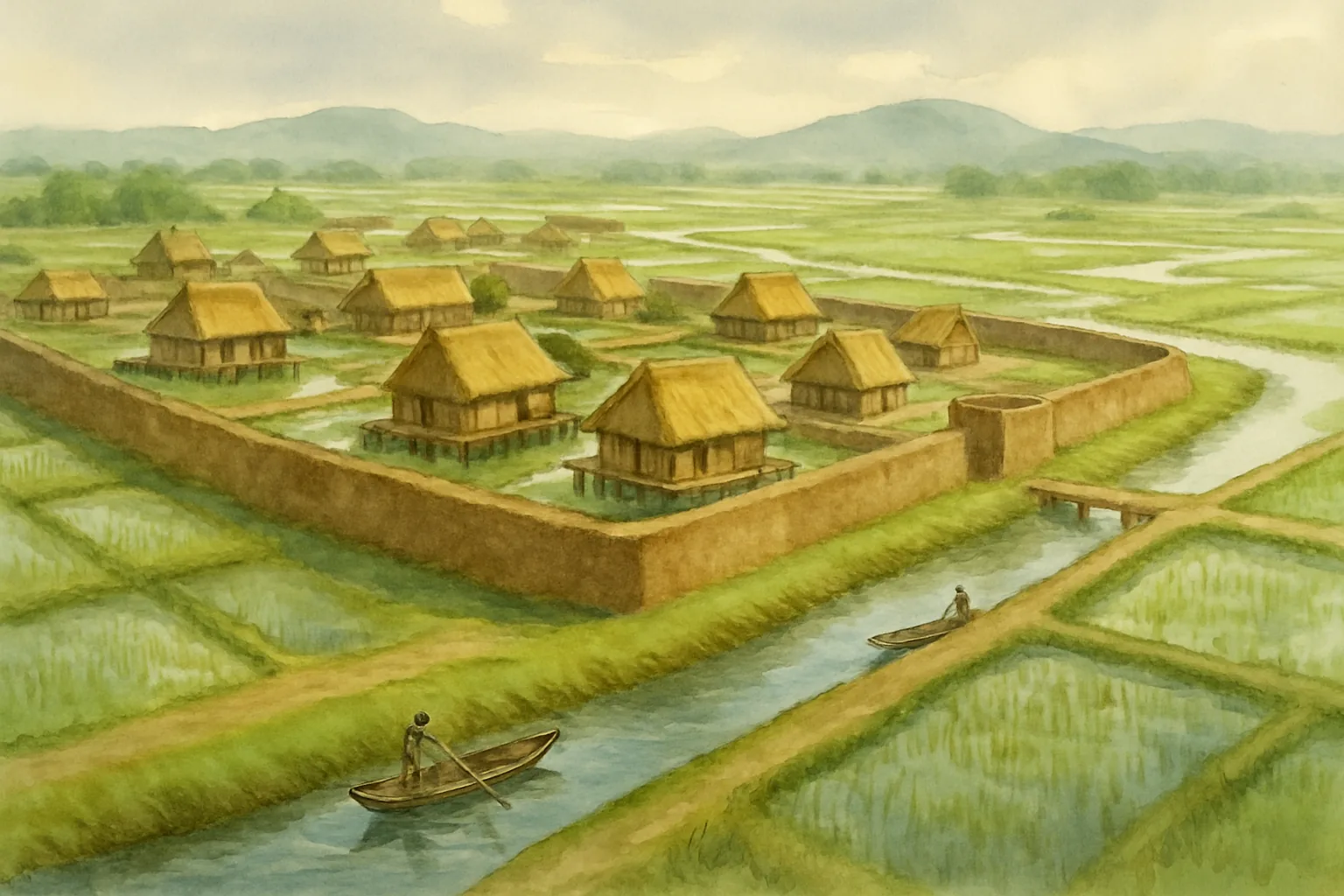
Shimao, in northern Shaanxi, is the harder and stranger one. Occupied between about 4,200 and 3,700 years ago, it covered nearly 1,000 acres behind a defensive wall, in country no textbook placed a city in. An ancient DNA study published in 2026 found its people descended from local groups with genetic ties to the Yangshao culture of the Yellow River loess. The same work re-read the 80 skulls buried in pits by the East Gate: nine in ten were male, not female as long assumed, and they are thought to have been sacrificed. Shimao is remote and thinly served, and it belongs on a second China trip, not a first.
Bronze Age: Yin Xu and the oracle bones
Yin Xu at Anyang in Henan is the last capital of the Shang dynasty and, for anyone interested in writing, the single most consequential archaeological site in East Asia. The oracle bones excavated here carry the earliest known Chinese script, incised on ox scapulae and turtle plastrons that Shang diviners cracked with heat and then annotated with the question and the outcome. Inscribed by UNESCO in 2006, the site preserves palace and ancestral temple foundations, royal tombs and chariot burials.
The visit changed shape in February 2024, when the new Yinxu Museum opened on the bank of the Huan River facing the palace ruins. Eight halls over three floors hold nearly 4,000 sets of artifacts, and it is the first national museum devoted comprehensively to Shang civilization. Do the museum first and the foundations second. Without the bronzes and the inscribed bone in your head, the ruins read as rectangles of rammed earth.
Xi’an: the imperial foundation
Xi’an is where most first-time ancient itineraries should start, because the density here is unmatched and the high-speed rail connections are excellent.
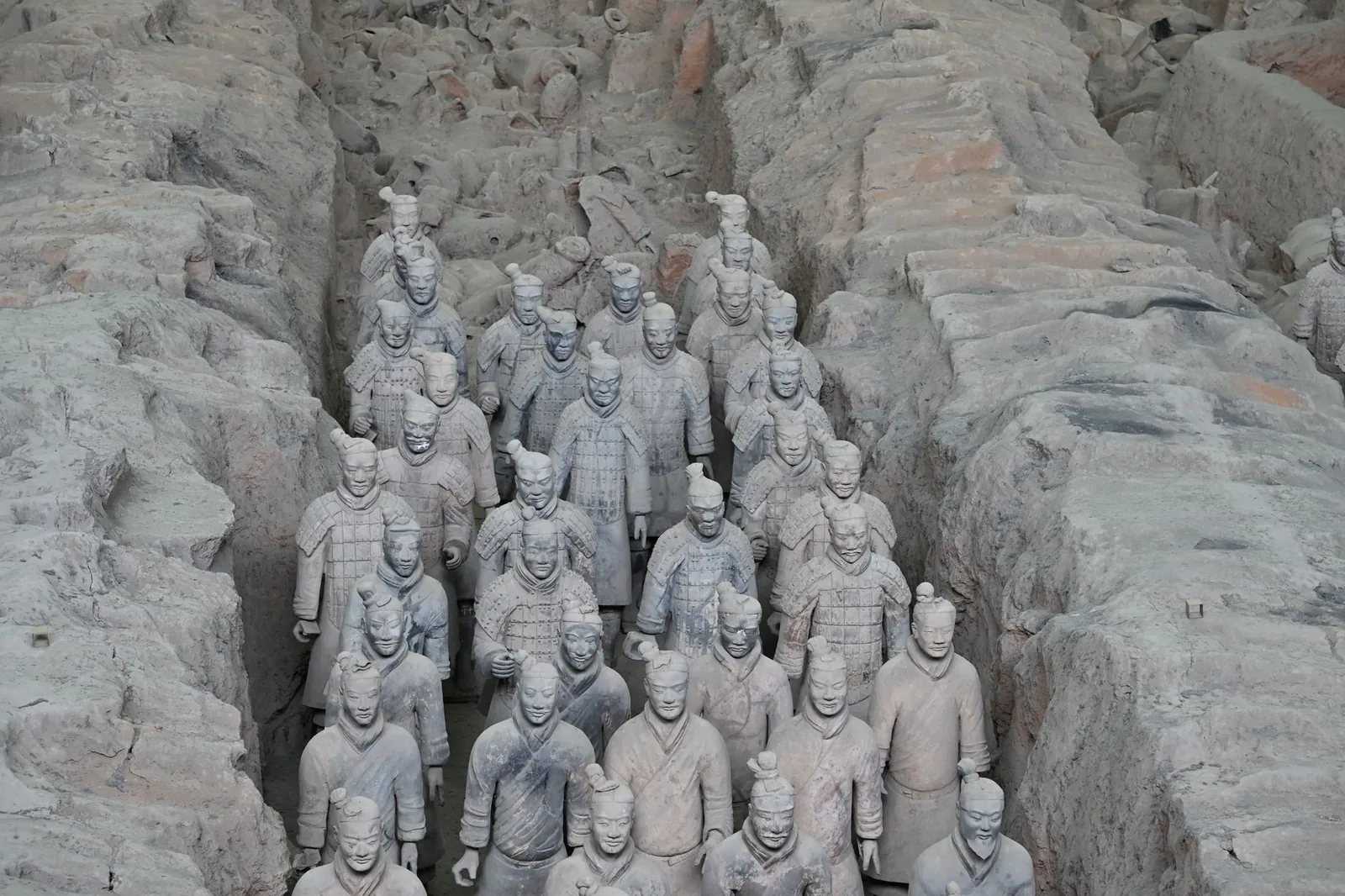
The Terracotta Army guards the mausoleum of Qin Shi Huang, and the burial mound itself remains unexcavated by deliberate policy. Ticketing is the thing to get right. Every ticket must be bought online in advance, since nothing is sold at the gate. The official website and WeChat account release seats seven days out, while Trip.com opens more than 30 days ahead, which is the practical route for foreign passport holders. Book at least three to five days early, ten in a public holiday week. Bring the passport you booked with and exchange your reservation for a paper ticket at the designated counter east of the ticket office. Go at opening or in the last two hours, and start at Pit 1 before the tour groups reverse the flow.
Han Chang’an is the quieter half of the story. The Weiyang Palace site of the Western Han capital is inscribed as a component of the transnational Silk Roads: Chang’an to Tianshan Corridor property, listed in 2014 across China, Kazakhstan and Kyrgyzstan. There is little to see vertically. What you get is scale, and the sense of a capital laid out at the eastern end of a road that ran 5,000 km.
Give the city’s museums half a day. Provincial collections in China hold far more of the good material than the sites do, and you should expect that pattern everywhere. Even the small finds make the point: two 2,000-year-old Liubo game boards recently identified in Shaanxi were carved into plain bricks, and it is not clear anyone ever played on them rather than making them as symbolic versions for a tomb.
The Great Wall, by section
Treat the Wall as a set of separate destinations rather than one line on a map. The section decides the day.
- Badaling is the most visited stretch of wall on earth, taking more than 10 million people a year, with Golden Week peaks approaching 80,000 at once. Skip it unless mobility access is your priority, in which case its infrastructure is genuinely the best.
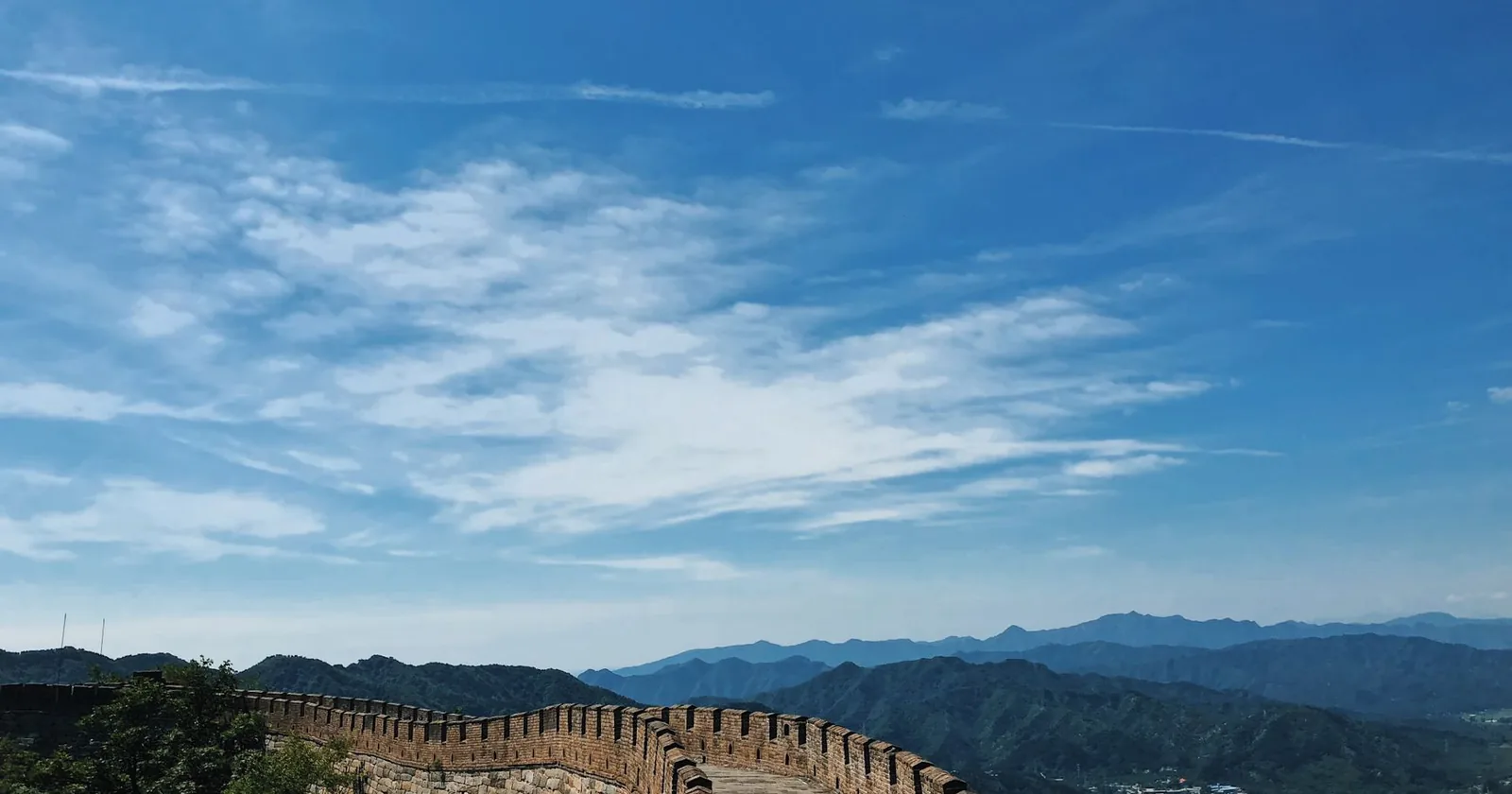
- Mutianyu is the sensible default: fully restored, cable car up, toboggan down, forested setting, crowds that thin within twenty minutes of walking. Best choice for families and for anyone with one Wall day.
- Jinshanling is the photographer’s and hiker’s section, partly restored and partly crumbling, with long sightlines along the ridge.
- Jiankou and Gubeikou are wild wall, unrestored and being reclaimed by vegetation. Fit, experienced hikers only, with a guide.
Whichever you choose, go on a weekday and start early. The crowd dynamics here are the same problem you meet at Pompeii, solved the same way.
Dunhuang and the Hexi Corridor
The Mogao Caves outside Dunhuang in Gansu hold roughly a thousand years of Buddhist wall painting and sculpture, and they are the reason to fly northwest. They are also strictly rationed. Only 6,000 Type A tickets and 12,000 Type B are released daily, an 18,000-visitor ceiling. Type A, 258 yuan, buys a two-hour guided tour of eight caves plus two films at the Digital Exhibition Center. Type B, 100 yuan, gives four caves with a Chinese-language guide.
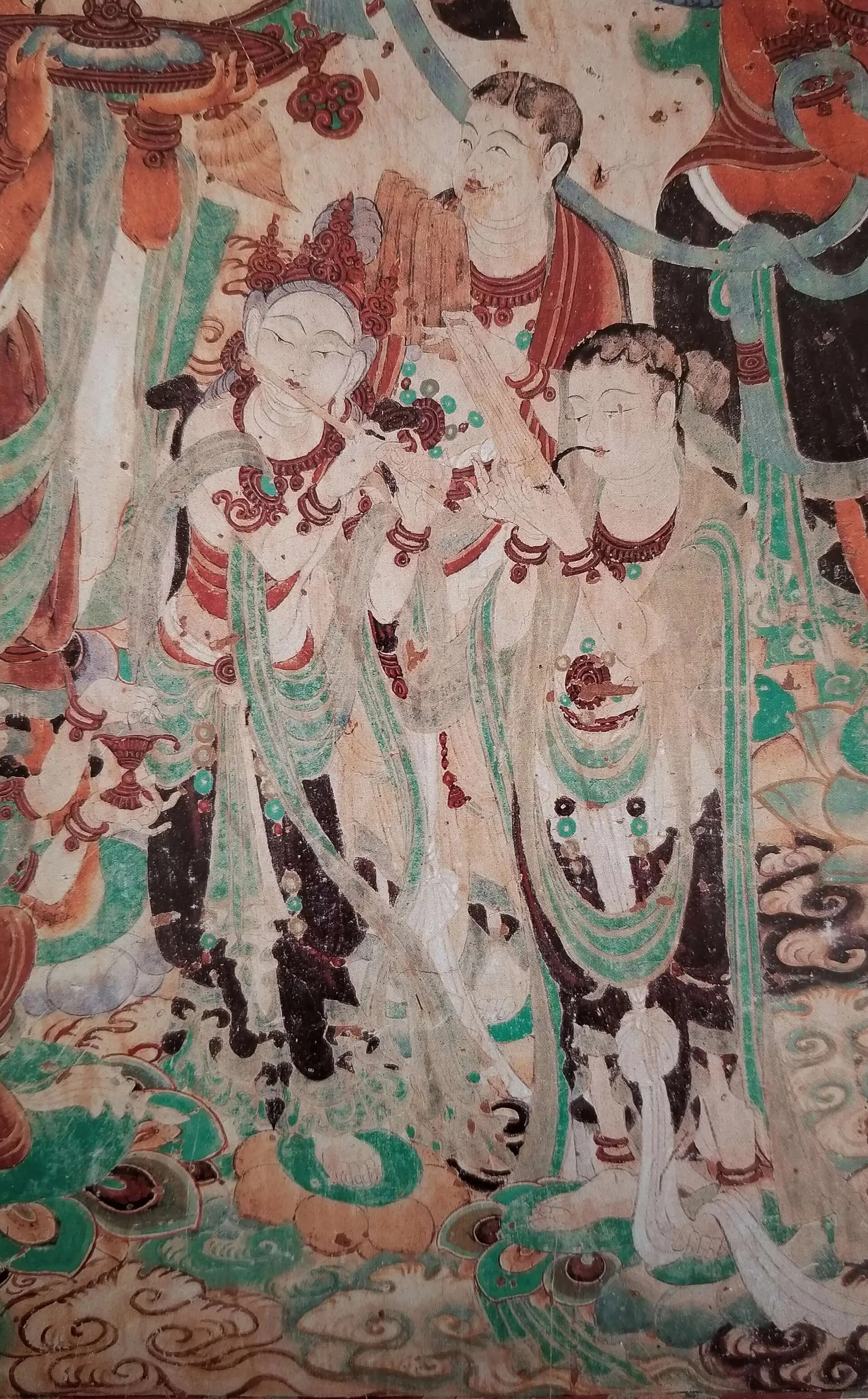
Book 30 days ahead for the summer peak. Foreign visitors have a separate and limited daily allocation, bought in person at the ticket office in the Digital Exhibition Center about 9 km from town, or through the official WeChat mini-program, because the desktop booking site requires a Chinese national ID. No flash, and no photography at all inside the painted caves.
While you are on the corridor, the Han-era Yumen Pass and the ruins of Suoyang City are also inscribed Silk Roads components, and they give you the military and logistical apparatus that made the trade route function.
Sanxingdui, and the sites without a badge
The bronzes from Sanxingdui at Guanghan in Sichuan, with their gold masks and tall staring eyes, do not resemble anything from the Yellow River heartland, and the ancient Shu state that made them is still poorly understood. The new museum opened to the public on 28 July 2023 with 22,000 square meters of display and more than 1,500 objects, nearly 600 of them shown for the first time. Adult admission is 72 yuan, tickets are released at 8pm daily and must be booked about five days ahead through the official mini-program, and the site is an easy day trip from Chengdu.
Note what Sanxingdui does not have: World Heritage status. It has been on China’s tentative list since January 2013, as part of a proposed Archaeological Sites of the Ancient Shu State entry with the Jinsha site in Chengdu. As our guide to how the World Heritage list works sets out, a tentative listing means a country has flagged a candidate, not that anyone has assessed it. Absence of a badge is not absence of significance.
The reverse trap is worth naming too. Not every new Chinese inscription is archaeological. Days after Jingdezhen went on the list, the committee approved a boundary extension adding the 4,900-hectare Changshan Archipelago off Dalian to China’s Yellow Sea and Bohai Gulf migratory bird sanctuaries, a natural property serving more than 140 species on the East Asian-Australasian Flyway. Excellent birding, no ruins. The 2026 Busan session added 25 properties in all, 19 of them cultural.
Practicalities
Season. April to May and September to October, almost everywhere. The northwest is brutally hot in July and August and the Wall sections north of Beijing get bitter from December. Avoid the first week of October and Chinese New Year entirely, when domestic travel volumes make booking anything difficult.
Entry. China’s unilateral visa-free scheme now covers a long list of nationalities for stays of up to 30 days and runs to the end of 2026, with a separate 240-hour visa-free transit arrangement covering more than 50 nationalities at 60-plus ports. The lists change often, so verify against your own passport before you plan around them. US passport holders are not on the unilateral list at present but can use the transit route.
Moving between regions. High-speed rail beats flying for anything under about five hours of track: Beijing to Xi’an, Xi’an to Chengdu, Shanghai to Hangzhou. Take the plane for Xi’an to Dunhuang and for Chengdu to almost anywhere in the north.
Booking. Nearly every major site and museum now runs real-name advance reservation, and several of the best museums are free but capped, which means they sell out days ahead. Carry your passport at all times: it is both your ticket and your ID at the turnstile.
Sites versus museums. Say it once more, because it governs how you spend your days. In China the object usually lives in the provincial museum and the site keeps the plan. That is the opposite of the balance you find at somewhere like Crete’s Minoan palaces, and it means an afternoon indoors is not a consolation prize here. It is often the main event.
Further reading (sources)
- UNESCO on the 25 properties inscribed at the 48th session in Busan
- Xinhua for Jingdezhen’s porcelain industry sites joining the World Heritage List
- Archaeology Magazine with the ancient DNA analysis of the dead at Shimao
- UNESCO World Heritage Centre keeps the record for the Chang’an to Tianshan Silk Roads corridor
- Archaeology Magazine on two Liubo game boards identified in Shaanxi
- CGTN for the Changshan Archipelago extension to the Yellow Sea bird sanctuaries
Feature photo by Van Anh Nguyen on Pexels.