The Complete Guide to UNESCO World Heritage Sites: How the List Works and How to Travel It
You start noticing the emblem everywhere once you know to look for it. A bronze plaque bolted to the gate of a Greek temple. A line on a hotel website. A sticker on the side of a tour bus in Cusco. UNESCO World Heritage Site. Most travelers read it as a general quality mark and move on.
It is far more specific than that, and knowing what it actually certifies makes you a better trip planner. The designation tells you what experts decided was exceptional about a place, roughly what rules you will meet at the entrance, and, uncomfortably often, how crowded it is going to be. Here is how the list works, and how to use it without turning your travels into a scavenger hunt.
What “World Heritage” actually means
The system grew out of the 1972 World Heritage Convention, itself a product of the postwar realization that conflict, industry, and development could erase irreplaceable places faster than any single country could protect them. The first twelve sites were inscribed in 1978.
Everything turns on one phrase: Outstanding Universal Value. A property has to matter so much that its significance crosses national borders and belongs, in principle, to all of humanity. That is a deliberately high bar, and it is why your favorite ruin down the road is not on the list.
Properties come in three flavors. Cultural sites cover human works: monuments, archaeological zones, historic city centers. Natural sites cover landscapes and ecosystems. Mixed sites qualify on both counts, and there are surprisingly few of them. As the 48th Committee session opened in Busan in July 2026, the list stood at 1,248 properties across 170 countries: 972 cultural, 235 natural, and 41 mixed, with another 30 nominations on the table.
One common misunderstanding is worth clearing up early. UNESCO does not own or operate these places. Day to day management stays with the country, and often with a regional or municipal authority. What inscription brings is international scrutiny, access to conservation funding and expertise, and a binding commitment to look after the thing.
The ten criteria, in plain language
A nomination has to meet at least one of ten criteria. The first six are cultural, the last four natural, and until 2005 they were kept as two separate sets before being merged into one.
The cultural criteria:
- (i) A masterpiece of human creative genius.
- (ii) Evidence of an important exchange of human values across time or across a cultural region, visible in architecture, technology, town planning, or landscape design.
- (iii) Unique or at least exceptional testimony to a cultural tradition or a civilization, living or vanished.
- (iv) An outstanding example of a building type, architectural ensemble, or landscape that illustrates a significant stage in human history.
- (v) An outstanding example of traditional settlement or land use representing a culture, especially one that has become vulnerable.
- (vi) A direct association with events, living traditions, ideas, beliefs, or artistic works of outstanding universal significance. This one is used sparingly and usually alongside another criterion.
The natural criteria:
- (vii) Superlative natural phenomena or exceptional natural beauty.
- (viii) A major record of Earth’s history, its landforms, or its geological processes.
- (ix) Significant ongoing ecological and biological processes.
- (x) The most important natural habitats for conserving biological diversity, including habitats of threatened species.
Meeting a criterion is not sufficient on its own. A property also has to pass tests of integrity (is enough of it intact, and does the boundary include what matters?), authenticity for cultural sites (is it genuine rather than a modern guess?), and it must have a credible protection and management system already in place.
Reading a site’s inscription record before you visit is the most underrated piece of pre-trip homework I know. Each entry on the UNESCO site lists which criteria were applied and why. Crete’s six Minoan palaces, for instance, were inscribed under four cultural criteria, one of which recognizes the invention of European writing on the island. Knowing that changes what you look at when you walk the ruins.
How a site actually gets on the list
The path is far longer than most travelers assume. A decade from first idea to inscription is normal.
- The country signs the Convention. There are 196 States Parties, which is nearly every country on Earth.
- The site goes on a Tentative List. This is the national waiting room, and a property has to sit on it for at least a year before it can go further.
- A nomination dossier is submitted, due at the World Heritage Centre by February 1. These run to hundreds of pages of history, boundary maps, conservation plans, and management commitments.
- An advisory body evaluates it. ICOMOS handles cultural nominations, IUCN handles natural ones, and both weigh in on mixed properties. Evaluation includes an expert site visit and takes roughly 18 months.
- The Committee decides. Twenty-one countries, elected from the States Parties, meet each summer and vote. They can inscribe, refer a dossier back for minor fixes, defer it for substantial rework, or decline it outright.
That annual meeting is where the map of places worth traveling for gets redrawn, which is why it is worth watching. The 2026 session in Busan is reviewing 30 new nominations alongside the conservation status of 147 sites already listed.
The In Danger list, and how a site can lose status
Alongside the main list sits the List of World Heritage in Danger, which held 53 properties as the Busan session opened. Sites land there because of armed conflict, uncontrolled development, poaching, or, increasingly, climate change.
Treat it as a distress flare rather than a closed sign. Most in-danger sites still welcome visitors, and the listing exists to mobilize help. Recovery genuinely happens: the Belize Barrier Reef Reserve System came off the danger list in 2018 after Belize strengthened its environmental protections.
Full removal from the World Heritage List is vanishingly rare. It has happened three times. The Arabian Oryx Sanctuary in Oman went first in 2007, after the protected area was cut back sharply to allow oil exploration. Dresden Elbe Valley followed in 2009, when Germany built a four-lane bridge straight through the listed landscape. Liverpool Maritime Mercantile City was delisted in 2021 over waterfront redevelopment. Notably, Liverpool’s visitor numbers did not collapse afterward, which says something about how loosely the badge and the tourism are actually coupled.
Who holds the most, and why density beats quantity
Italy currently leads the world with 61 properties, 55 cultural and 6 natural. China follows with 60, then Germany with 55, France with 54, and Spain with 50.
The useful lesson in those numbers is not national bragging rights, it is density. Italy’s total means that almost anywhere you base yourself, several listed properties sit within a short drive. The Bay of Naples alone gives you Pompeii, Herculaneum, and Oplontis in a single inscription, close enough to combine with the Amalfi Coast and the Royal Palace at Caserta. If you want to understand what you are looking at when you get there, the frozen Roman building site in Pompeii’s Regio IX is one of the most instructive things on the whole peninsula.
It is worth flipping the logic too. Countries with a handful of sites often deliver a far quieter experience for the same historical weight. Egypt’s headline properties draw enormous crowds, yet the ancient sites scattered across its Western Desert oases see a fraction of the traffic.
The catch nobody puts on the plaque
Inscription reliably produces one outcome above all others: more visitors. Researchers who study cultural tourism describe World Heritage status as functioning like a star rating in a guidebook, and social media has sharpened the effect enormously.
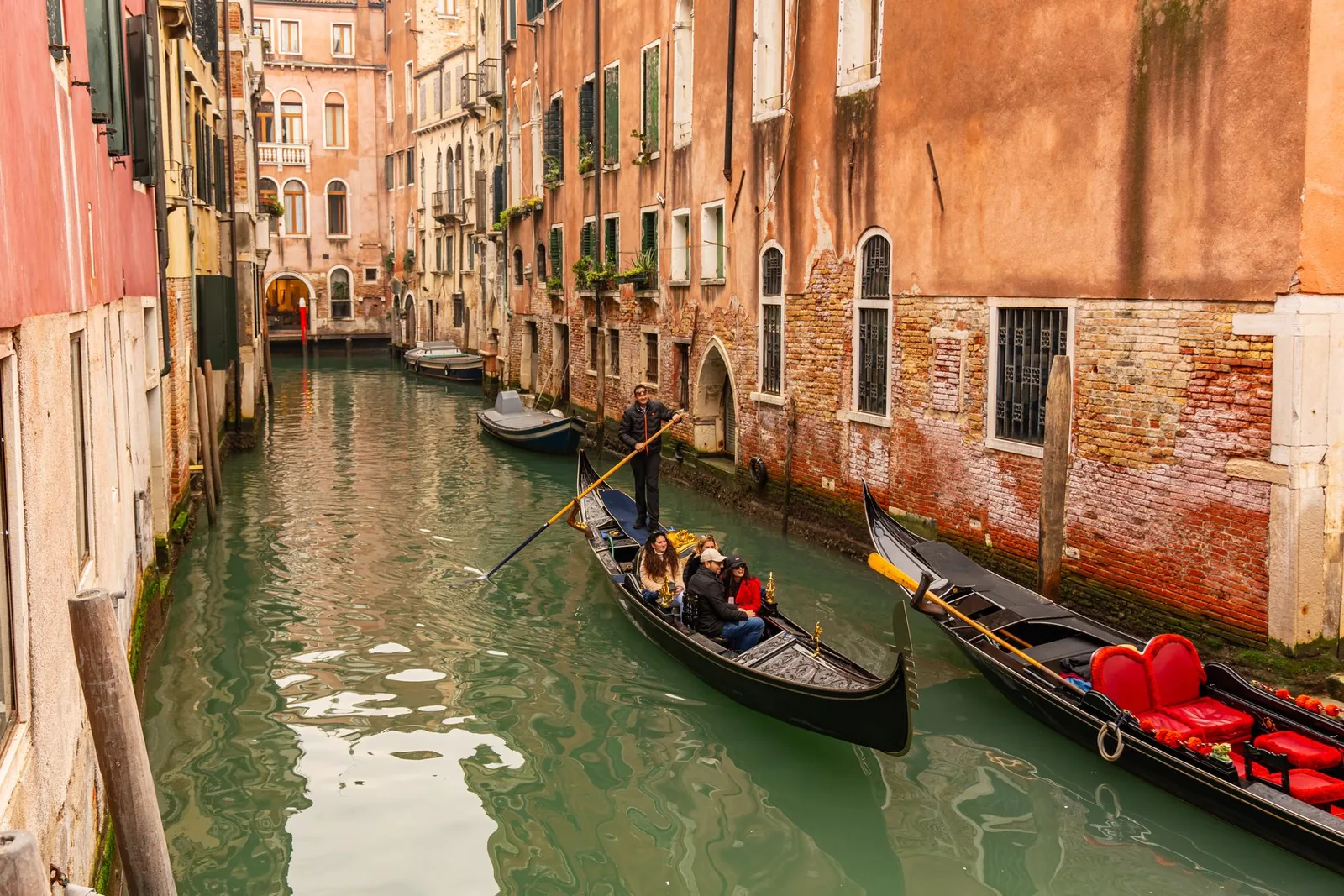
Sometimes that pressure turns ugly. Vlkolínec, a Slovak village of roughly 20 permanent residents living in 45 painted cottages, was listed in 1993 and now absorbs more than 100,000 visitors a year. Some locals have argued for delisting. In Tanzania, a Maasai advocacy group has called for the Ngorongoro Conservation Area to be removed, arguing that conservation policy tied to its status has displaced pastoralist communities from ancestral grazing land. Venice, listed in 1987, has become a textbook case of residents leaving as tourism swells. Researchers call the wider pattern “museumification”: a living community reorganizing itself around visitors rather than the people who live there.
UNESCO now asks sites to produce visitor management plans, and its sustainable tourism specialists are candid that tourism has changed beyond recognition in the past fifteen years. But the system has a real blind spot. It can flag a site as in danger from war or development, and it cannot flag one as in danger from the tourism its own designation created.
How to travel the list without chasing checkmarks
- Read the inscription record first. Every property has a page at whc.unesco.org listing its criteria, boundaries, and conservation status. Ten minutes there will reshape what you actually look at on site.
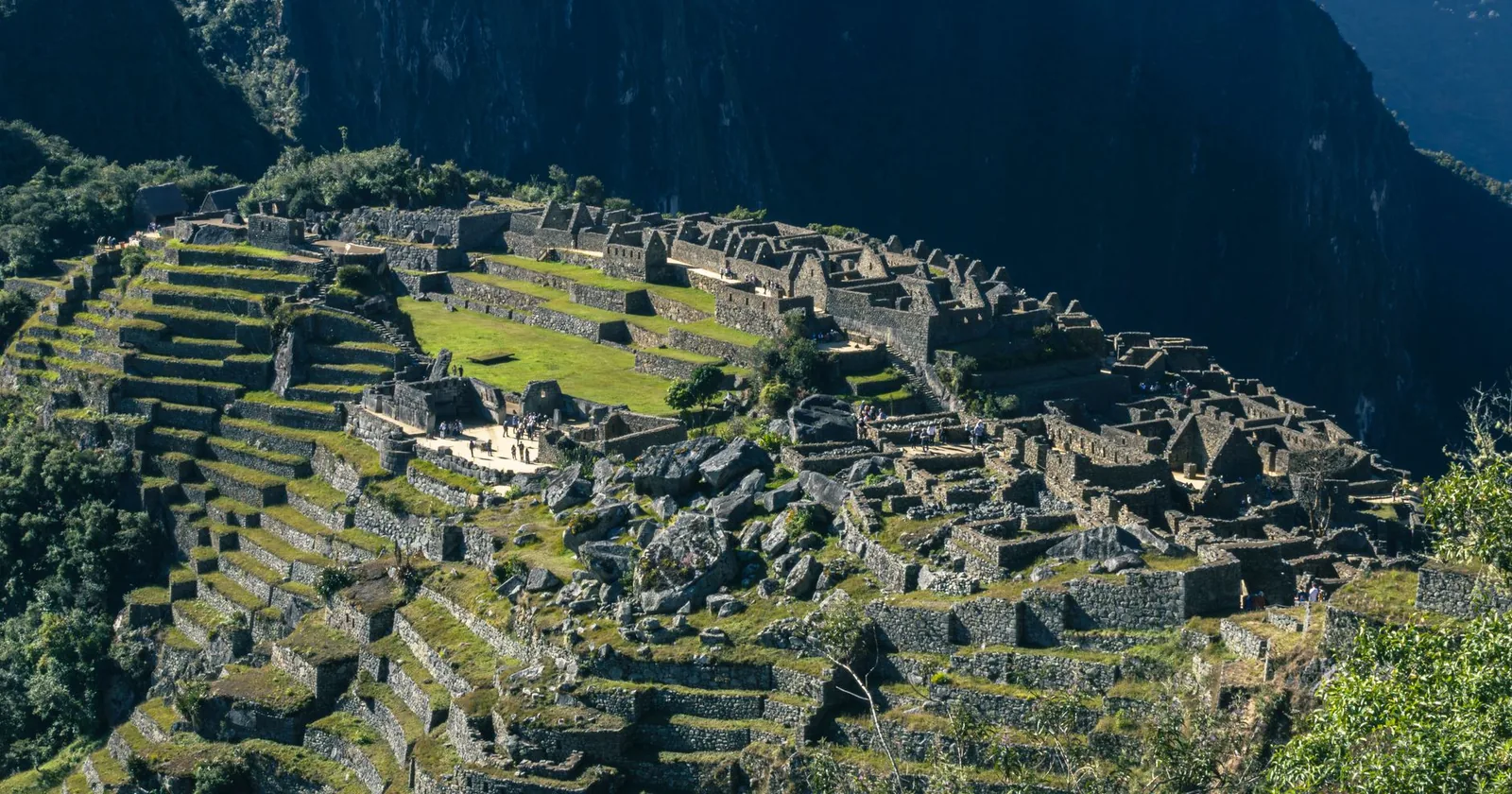
- Book the famous ones well ahead. The Colosseum, the Acropolis, Machu Picchu, and the Alhambra all use timed entry and all sell out in high season. This is not a formality.
- Cluster rather than collect. Three sites in one region, seen properly, beats seven sprinted through. Heritage properties are geographically lumpy for good historical reasons.
- Go in shoulder season, and go early or late. Spring and autumn are kinder at nearly every ancient site, and the first and last hours of the day give you better light and a fraction of the crowd.
- Expect stricter rules. Drone bans, tripod bans, no-touch policies, capacity caps, and restricted zones are all more common at listed sites. Check before you pack.
- Catch new inscriptions early. There is usually a calm window of a year or two after listing, before infrastructure and tour operators fully arrive.
- Spend locally. In places where residents carry the cost of the crowds, where your money lands is the part of the visit you actually control.
- Check accessibility honestly. Ancient sites are rarely level, rarely shaded, and often short on facilities. Integrity requirements mean many of them cannot be modernized much.
The list was never meant to be a bucket list, and treating it as one is how you end up with 40 photographs and no memories. Used properly, it is something better: a curated, argued, footnoted index of what humanity has decided is worth keeping. Read the argument, then go see whether you agree.
Further reading (sources)
- UNESCO World Heritage Centre on the ten selection criteria and how they are applied
- BBC Travel with a report on the communities asking to be delisted
- UNESCO for the 48th Committee session agenda and nomination slate
- Parametric Architecture on the countries holding the most World Heritage properties
- UNESCO World Heritage Centre for the nomination process and submission deadlines
Feature photo by Irene Constantino on Pexels.