Egypt's Western Desert Oases: Ancient Sites Beyond the Nile
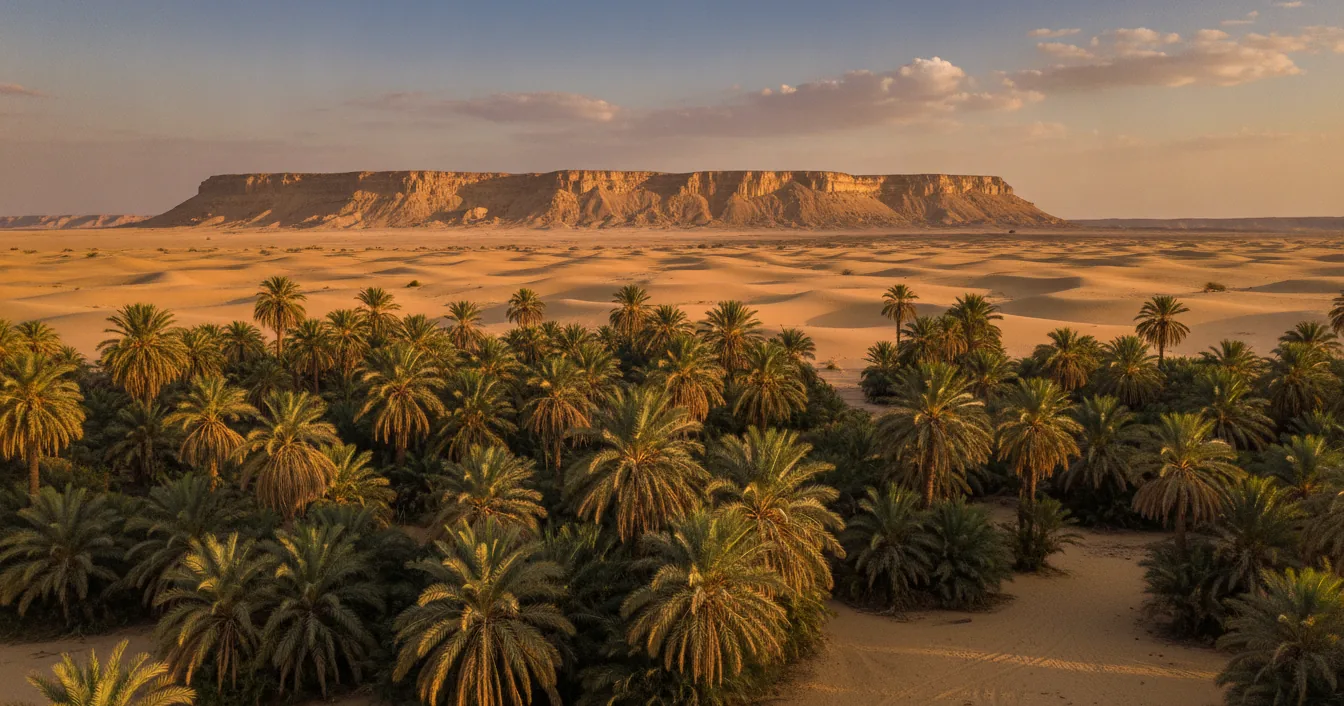
Egypt’s tourist map is a ribbon. Cairo at the top, Luxor and Aswan strung out below, and almost every visitor moving up and down the same thin green corridor of the Nile. Drive two hundred kilometers west of that ribbon and the country changes completely. Out in the Western Desert, a chain of depressions in the limestone plateau holds springs deep enough to grow date palms, and around those springs sits a parallel ancient Egypt: Persian temples, Roman fort towns, some of the oldest Christian buildings on earth, and gilded Greco-Roman mummies by the hundred. Hardly anyone goes.
That is starting to look like an oversight. In July 2026, Egypt’s Ministry of Tourism and Antiquities announced that a mission from the Supreme Council of Antiquities had uncovered an entire fortified city of the Byzantine era at Ain el-Sabil, in the Dakhla Oasis. It is one of the most complete settlements of its date ever found in the Western Desert, and it is a useful excuse to look properly at a region most itineraries skip.
The new city at Ain el-Sabil
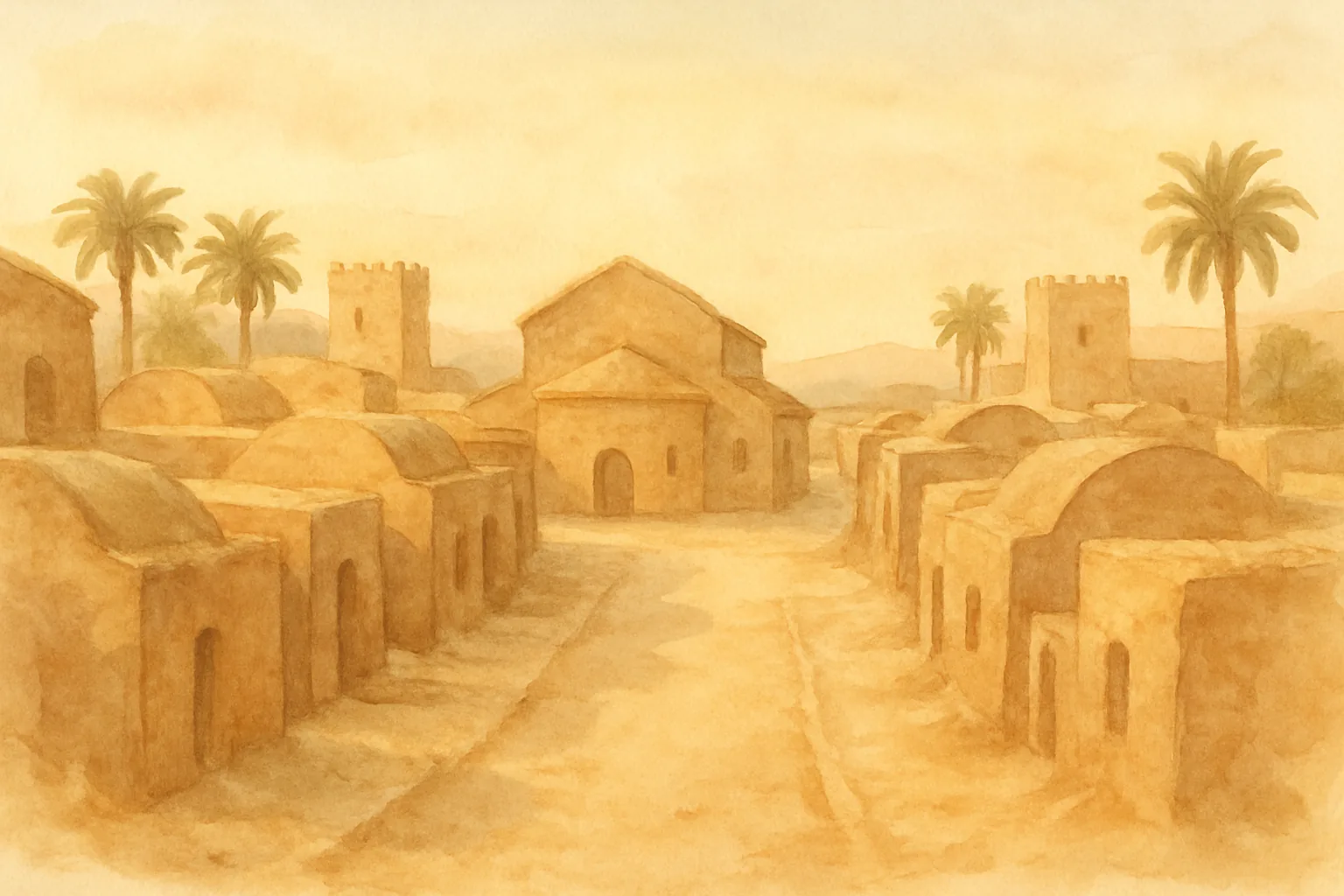
What makes the Ain el-Sabil find unusual is that it is a town, not a tomb. Excavators exposed a planned street grid with open squares, mudbrick houses roofed with barrel vaults, two watchtowers on the perimeter and a fortified structure anchoring the settlement. At its center stands a Christian basilica built around the middle of the fourth century AD, facing one of the main streets. Hisham El Leithy of the Supreme Council of Antiquities described it as a well planned city.
Two houses have already been tied to named residents, which is the sort of detail that makes a ruin feel inhabited: a residence belonging to a church deacon called Tisous, and an earlier home associated with a man named Tabibos, possibly used for worship before the basilica went up. The finds include pottery, oil lamps, perfume bottles, stone grinding tools and gold coins struck under Constantius II (AD 337 to 361). Best of all are nearly two hundred inscribed ostraca, potsherds carrying Coptic and Greek texts about transactions and correspondence. Receipts and letters, in other words, from ordinary people in a desert town.
You cannot visit Ain el-Sabil yet. New excavations in Egypt typically stay closed for years while conservation and study proceed, and this one was announced weeks ago. But the surrounding oasis is thoroughly open, and the same appeal applies here as at the dig beneath Notre-Dame in Paris: being in a landscape that is still actively giving things up.
Dakhla: a Roman temple and a market town
Dakhla is the softest of the oases, a 2,000 square kilometer spread of palm groves, ochre cliffs and mudbrick villages about 350 km west of the Nile. Two ancient sites justify a full day.
Deir el-Hagar, whose Arabic name translates as “monastery of stone”, stands at the oasis’s western limit some 10 km beyond the village of el-Qasr. The building is sandstone, begun under Nero (AD 54 to 68) and dedicated mainly to the Theban triad and to Thoth, and it is the most complete Roman monument in Dakhla. Excavated, restored and partly rebuilt during the 1990s by the Dakhleh Oasis Project working with the Supreme Council of Antiquities, it now stands with its sanctuary, courtyard and enclosure legible against open desert. Nineteenth-century European travelers carved their names into the stones, which is either vandalism or a second layer of history depending on your mood.
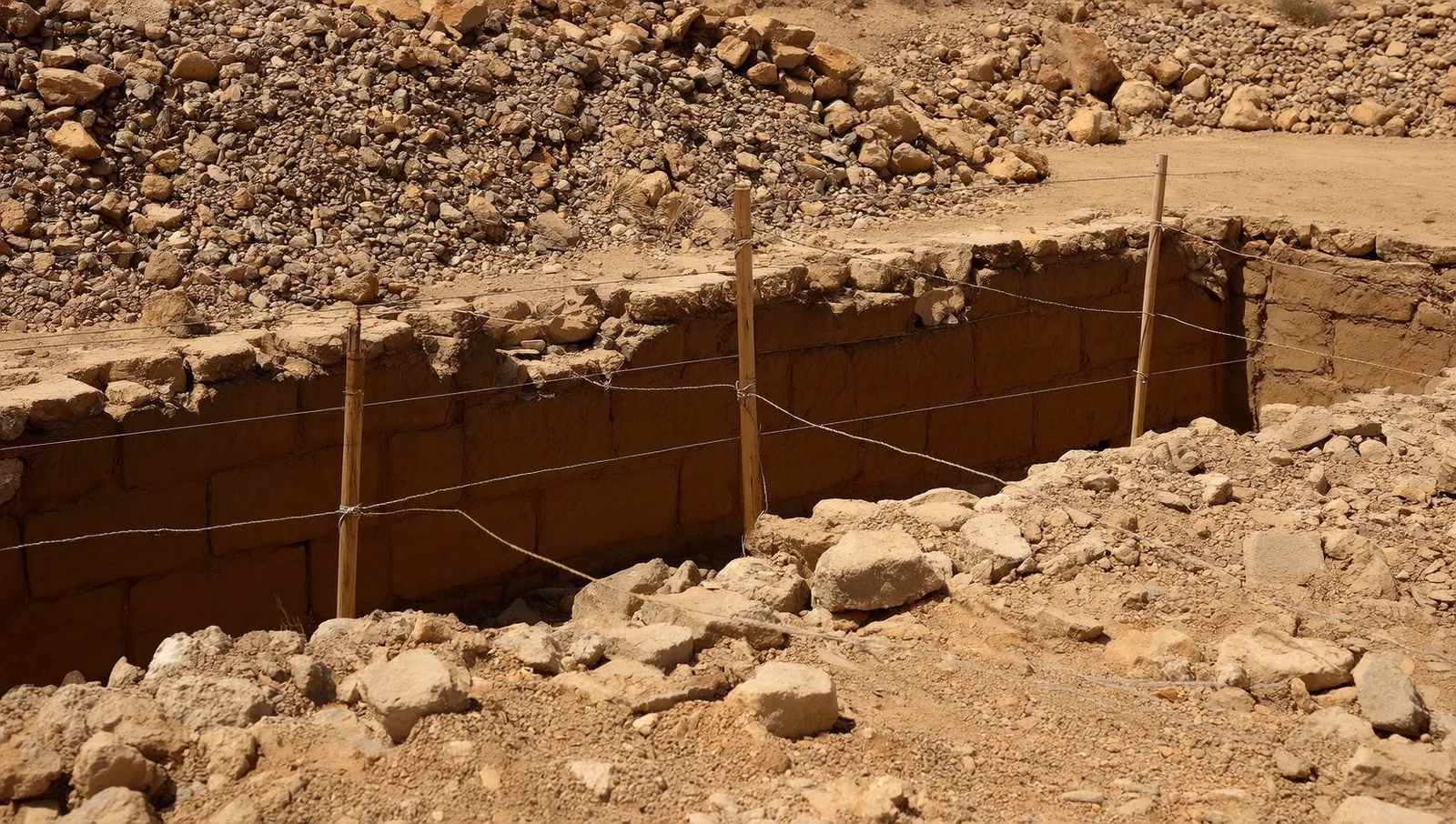
Kellis, known locally as Ismant el-Kharab, is the more demanding visit and the more rewarding one. This was an agricultural market town occupied from at least the first century until the end of the fourth, and excavation since 1991 has traced houses, churches, wells, a bath-house, aqueducts and a cemetery across roughly three quarters of a square kilometer. Its temple was dedicated to the lion-headed god Tutu, called Tithoes in Greek, and it is the only temple to that god known anywhere in Egypt. Kellis also produced a cache of Manichaean documents, rare survivals of a faith that once stretched from Rome to China, found in the houses where people actually read them. Wear proper shoes. This is a field of eroded mudbrick, not a swept monument, and reading it takes patience or a good guide.
While you are in the oasis, walk the medieval Islamic town of el-Qasr, with its covered lanes and carved acacia lintels. It is not ancient, but it shows how oasis building continued unbroken for two thousand years.
Kharga: Persia, and the first Christians
Kharga, the largest and easternmost oasis, is where the region’s headline monuments are.
The Temple of Hibis, about 2 km north of Kharga town, is the reason to come. Construction began under the 26th Dynasty, but the decoration belongs to the reign of Darius I of Persia, from around 522 BC, and the walls show the Persian great king in full pharaonic dress presenting offerings to Amun. It is the only structure from the Saite and Persian era to survive anywhere in Egypt in decent condition, which makes it something close to unique. Buried under farmland until a Metropolitan Museum of Art team excavated it from 1909, it suffered badly from rising groundwater and closed for a restoration costing around ten million dollars between 2005 and 2010. Go early: the reliefs read best in low, raking morning light.
A kilometer north lies the Necropolis of Bagawat, and it is genuinely extraordinary. Some 263 domed mudbrick funerary chapels, built between roughly the third and seventh centuries AD, make this one of the oldest surviving Christian cemeteries in the world. Two chapels carry painted programs worth the whole journey. The Chapel of the Exodus, from the first half of the fourth century, runs Moses leading the Israelites, Noah’s ark, Adam and Eve, Daniel among the lions and Jonah around its dome in loose ochre line-work. The Chapel of Peace, a century or two later, is more formal, its figures neatly labeled in Greek. The pigments are fragile and the chapels are dim, so no flash, ever.
South of town, two more sites cluster along the same road. Qasr el-Ghueita, 18 km out and 3 km east of the highway, is a mudbrick-walled fortress on a sandstone ridge enclosing a temple to Amun, Mut and Khonsu begun in the 25th Dynasty around 690 BC and extended by Persian, Ptolemaic and Roman builders. The view over the plain from the enclosure wall explains why they chose the hill. Just beyond it, Qasr el-Zayyan preserves a smaller Ptolemaic and Roman temple in a settlement the ancients called Takhoneourit, “the great well”. The Roman fortress of el-Deir, north of the town, survives nearly intact with its round corner towers.
Bahariya and the Golden Mummies
Closest to Cairo at around 365 km, Bahariya is the usual first stop and the one with the most famous discovery. In 1996 Zahi Hawass and an Egyptian team began uncovering a Greco-Roman cemetery near Bawiti that became known as the Valley of the Golden Mummies, for the gilded cartonnage masks on many of the burials. Around 250 were excavated over several seasons. Estimates of the total buried population run into the thousands, but those come from survey rather than full excavation, so read them as projections rather than counts.
Manage your expectations about access. The valley is not a walk-in archaeological park; what most visitors see is a selection of the mummies displayed in a small museum in Bawiti, alongside the nearby tombs of Bannentiu and Zed-Amun-ef-ankh and a temple of Alexander the Great whose sanctuary reliefs show Alexander offering to Amun. Check locally on the day, because opening arrangements here change more than they do on the Nile.
Routing, permits and season
The classic loop runs Cairo to Bahariya, southwest through the chalk pinnacles of the White Desert to Farafra, southeast to Dakhla, east to Kharga, then north back toward the Nile at Asyut or south toward Luxor. That is roughly 900 km on decent asphalt, and five to seven days is the honest minimum. A normal car handles the highways between oases perfectly well. You only need a 4WD, and a licensed guide, if you are leaving the road for the White Desert, the Great Sand Sea or the Gilf Kebir, and deep-desert travel toward the Libyan frontier requires permits arranged well in advance.
Expect police checkpoints at oasis entrances and carry your passport, since registration is routine. Season is not negotiable. Come between October and April, when daytime temperatures sit in the mid-twenties Celsius. Between May and September the oases pass 40C with no shade and no crowds to share the misery with, which is exactly the problem that also governs a Luxor west bank itinerary. Nights in winter get genuinely cold, so pack layers.
One last note on status. None of these sites carry World Heritage inscription. Egypt has instead placed the Western Desert oases on its UNESCO Tentative List, with Dakhla proposed as far back as 2003 and a separate entry covering Kharga and the smaller southern oases. Tentative listing means a country has flagged a candidate, not that it has been assessed, and the annual committee cycle covered in our guide to the 2026 Busan session is where such nominations rise or stall. For now that lack of a badge is precisely why you will have a fourth-century basilica or a Persian sanctuary largely to yourself, in a way that is unimaginable at Pompeii. Whether that lasts is another matter.
Further reading (sources)
- Archaeology Magazine on the Byzantine city uncovered at Ain el-Sabil
- CNN for Egypt’s announcement of the lost city in the western desert
- Dakhleh Oasis Project with three decades of excavation at Kellis
- UNESCO World Heritage Centre lists the southern and smaller Western Desert oases as a tentative site
- National Geographic on why these remote oases remain Egypt’s hidden gems