Luxor's Other Tombs: Visiting the Theban Necropolis Beyond the Valley of the Kings
Most travelers reach Luxor with a single image in their heads: the Valley of the Kings, and the slow, sun-struck queue that leads into it. The valley earns its fame, but it is only one corner of what the ancient Egyptians treated as a vast city of the dead. Across the Nile from the modern town, the desert hills of the west bank hide hundreds of painted private tombs, an intact workers’ village, and excavation trenches where New Kingdom history is still coming out of the ground. All of it, royal tombs included, sits within the UNESCO World Heritage Site of Ancient Thebes with its Necropolis, inscribed back in 1979.
The case for straying off the valley’s beaten track got stronger in July 2026, when a team from Leiden University led by Carina van den Hoven announced a newly uncovered tomb in the Sheikh Abd el-Qurna area of the necropolis. At the same moment, Egypt is pushing through a summer modernization drive designed to ease the winter crush at Luxor’s biggest sites. Here is how to spend your west-bank days on the tombs most visitors walk straight past.
A New Kingdom tomb at Sheikh Abd el-Qurna
The July 2026 find is a working reminder that the west bank is still an active dig. Early study of the wall texts points to a man named Paser, who lived somewhere in the 19th or 20th Dynasty, roughly between 1295 and 1070 BC. According to Mohamed Abdel Badei of Egypt’s Supreme Council of Antiquities, the tomb follows the template of the Theban elite of that era: an open courtyard, a chapel cut straight into the rock, and a floor plan laid out in the shape of an inverted “T.” Underground chambers held coffins and funerary goods, and the courtyard preserved an adobe mastaba and a staircase down to the entrance. Restorers are still lifting dust and sediment off the chapel walls to bring back the carved and painted scenes of Paser and his wife.
You cannot walk into this tomb yet, and it may be years before it opens, if it ever does. But standing on the same hillside while archaeologists work nearby is part of the appeal. If you like your history mid-excavation, it is the same thrill that draws people to the dig of the century beneath Notre-Dame in Paris: the sense of a place still giving up its secrets.
The Tombs of the Nobles: daily life in color
Here is the distinction that changes how you see Luxor. The royal tombs in the Valley of the Kings are decorated with the machinery of the afterlife, dense funerary texts and images meant to guide a pharaoh through the underworld. The Tombs of the Nobles, the private tombs of viziers, mayors, scribes, and priests scattered across Sheikh Abd el-Qurna and its neighboring slopes, show something rarer and warmer: this life. Harvests, banquets, music, hunting in the marshes, craftsmen at their benches. For reading everyday ancient life off a wall, they rival Pompeii’s frozen streets and workshops, and they are gloriously uncrowded.
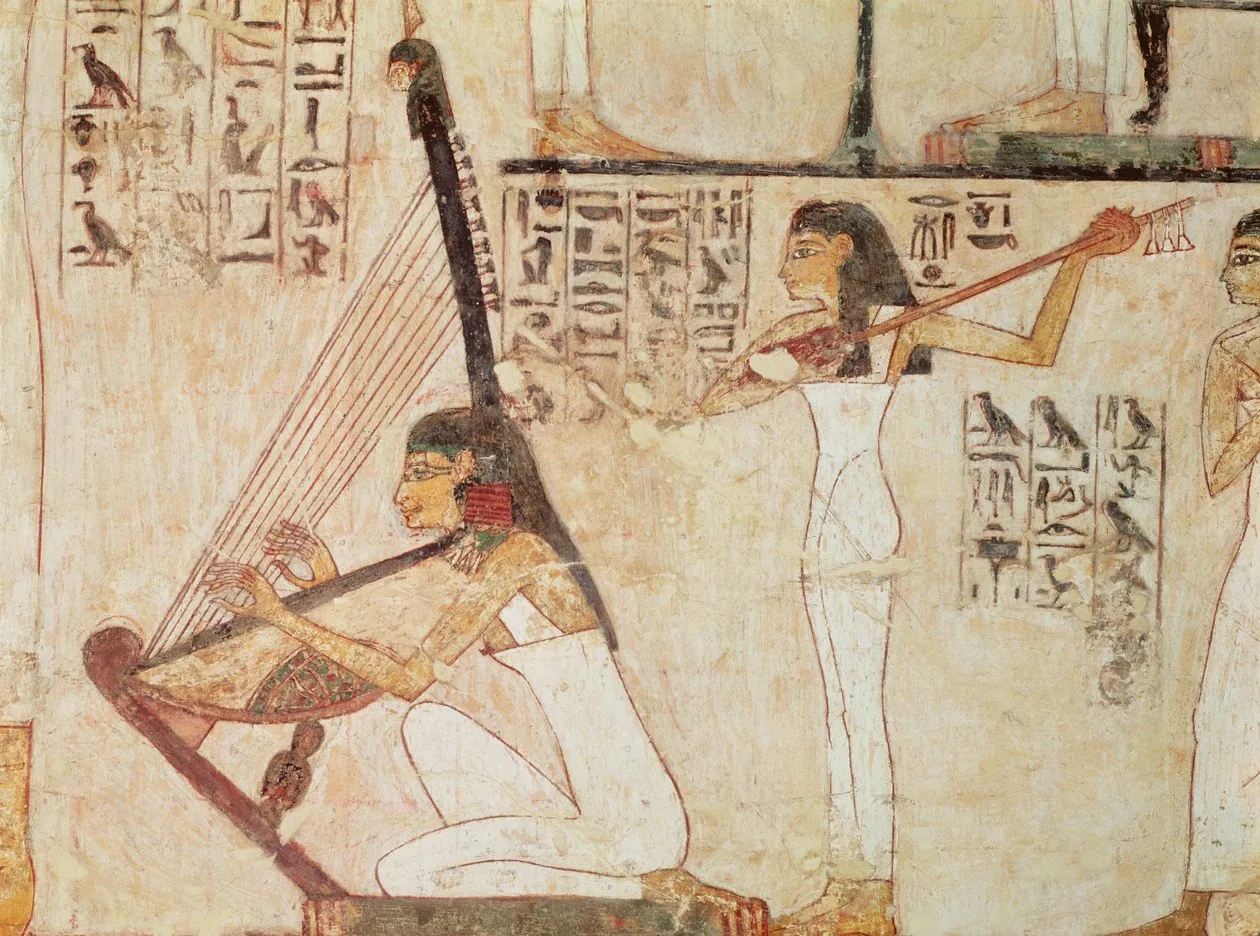
Three stand out. The tomb of Rekhmire (TT100), vizier under Thutmose III and Amenhotep II, is a picture book of empire: rows of foreign envoys from Nubia, Syria, and the Aegean bearing tribute, and workshops where men cast metal, cut stone, and mold bricks. The tomb of Sennefer (TT96), mayor of Thebes, is nicknamed the Tomb of the Vines because the ceiling of its burial chamber, reached by a steep stair, is painted with a canopy of grape arbors that follows every bump in the rough rock. The tomb of Ramose (TT55), a vizier who served both Amenhotep III and the heretic Akhenaten, is famous for raised relief so fine it looks pressed rather than carved, and for freezing the exact moment Egyptian art tipped from tradition into the strange new Amarna style. Ramose left it unfinished when the court moved north.
Deir el-Medina: the village that built the valley
A short drive south sits one of the most human places in all of Egypt. Deir el-Medina was the walled village of the craftsmen who actually dug and decorated the royal tombs. They called it Set Maat, the Place of Truth. For roughly four centuries the same families of stonecutters, draughtsmen, and painters lived here, and because they were literate and obsessive record-keepers, they left behind an astonishing paper trail on flakes of limestone and pottery: pay disputes, sick days, court cases, love poems, and the first documented labor strike in history, when Ramesses III’s workers downed tools over late grain rations.
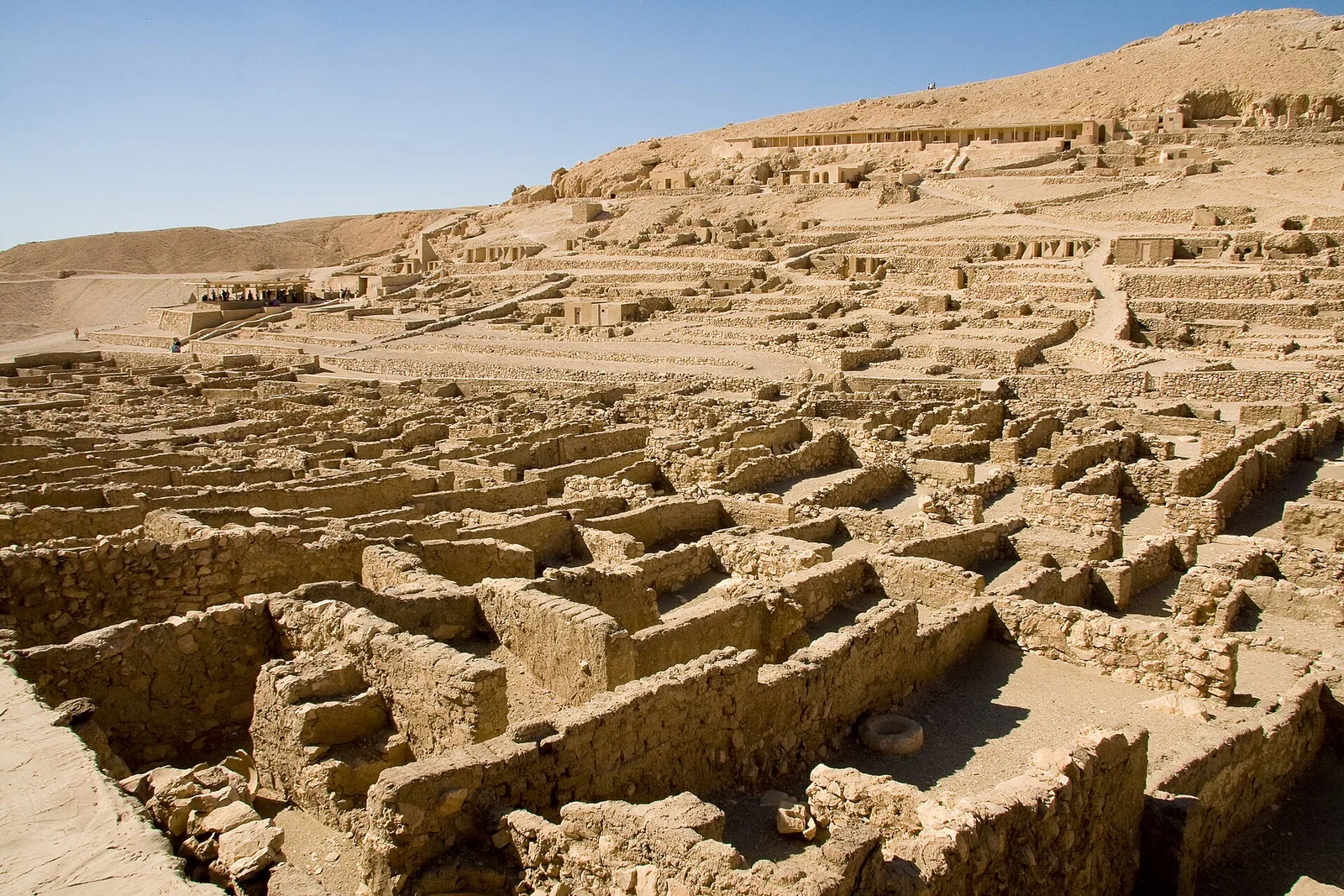
The workers built themselves jewel-box tombs too. The tomb of Sennedjem (TT1) is the showpiece, its small vaulted chamber packed with some of the brightest, best-preserved painting on the west bank, including the fields of the blessed dead rendered in deep reds and golds. Above the village stands a small, well-kept Ptolemaic temple to Hathor. Note that many of the finest objects unearthed here now live in museums in Cairo and Turin rather than on site, a familiar split that also separates Knossos from its treasures in Crete’s Minoan palace guide. See the ruins for the place, then chase the artifacts in the galleries.
The digs you can watch
The necropolis is broad, and several zones reward the curious. El-Assasif, in the basin below Hatshepsut’s temple, holds cavernous Late Period tombs like that of Pabasa (TT279), with sunken courtyards you climb down into. Dra Abu el-Naga, at the northern end, is where the gilded coffin of Queen Ahhotep surfaced in the nineteenth century and where foreign missions still dig each season. Nearby, the so-called Lost Golden City of Aten, a sprawling settlement from the reign of Amenhotep III uncovered in 2021 near Medinet Habu, is slowly being opened up. Not every trench is accessible, and active excavations come and go behind fences, so ask your guide what is open the week you visit.
Tickets, timing, and the heat
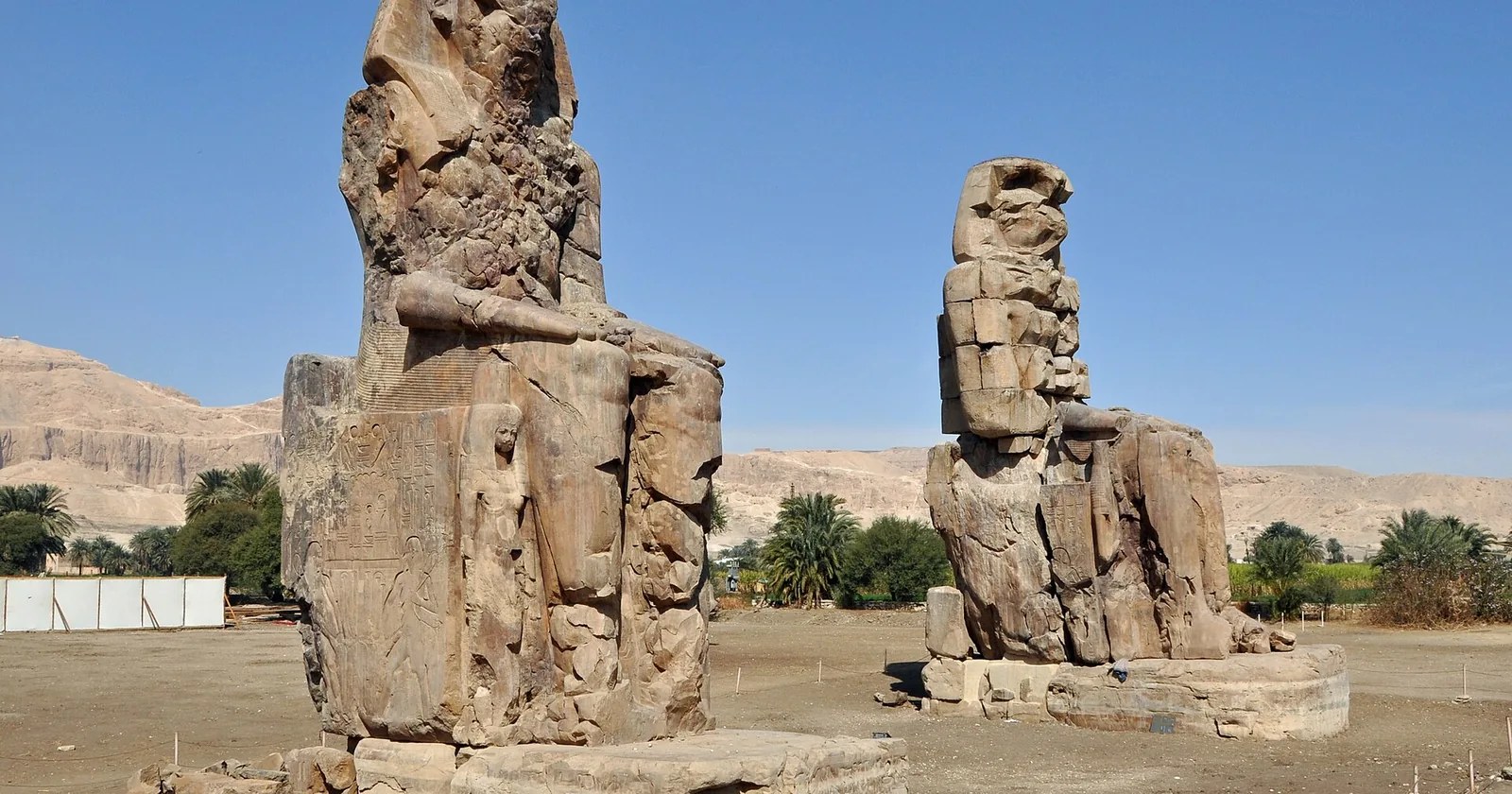
West-bank tickets work differently from a single valley pass. Most tombs are sold in small grouped tickets, two or three tombs each, at the central ticket office near the Colossi of Memnon, though several popular sites now sell at their own gates. Deir el-Medina and the main Nobles clusters each need their own ticket, so decide in advance which tombs you want and budget for a handful of separate entries.
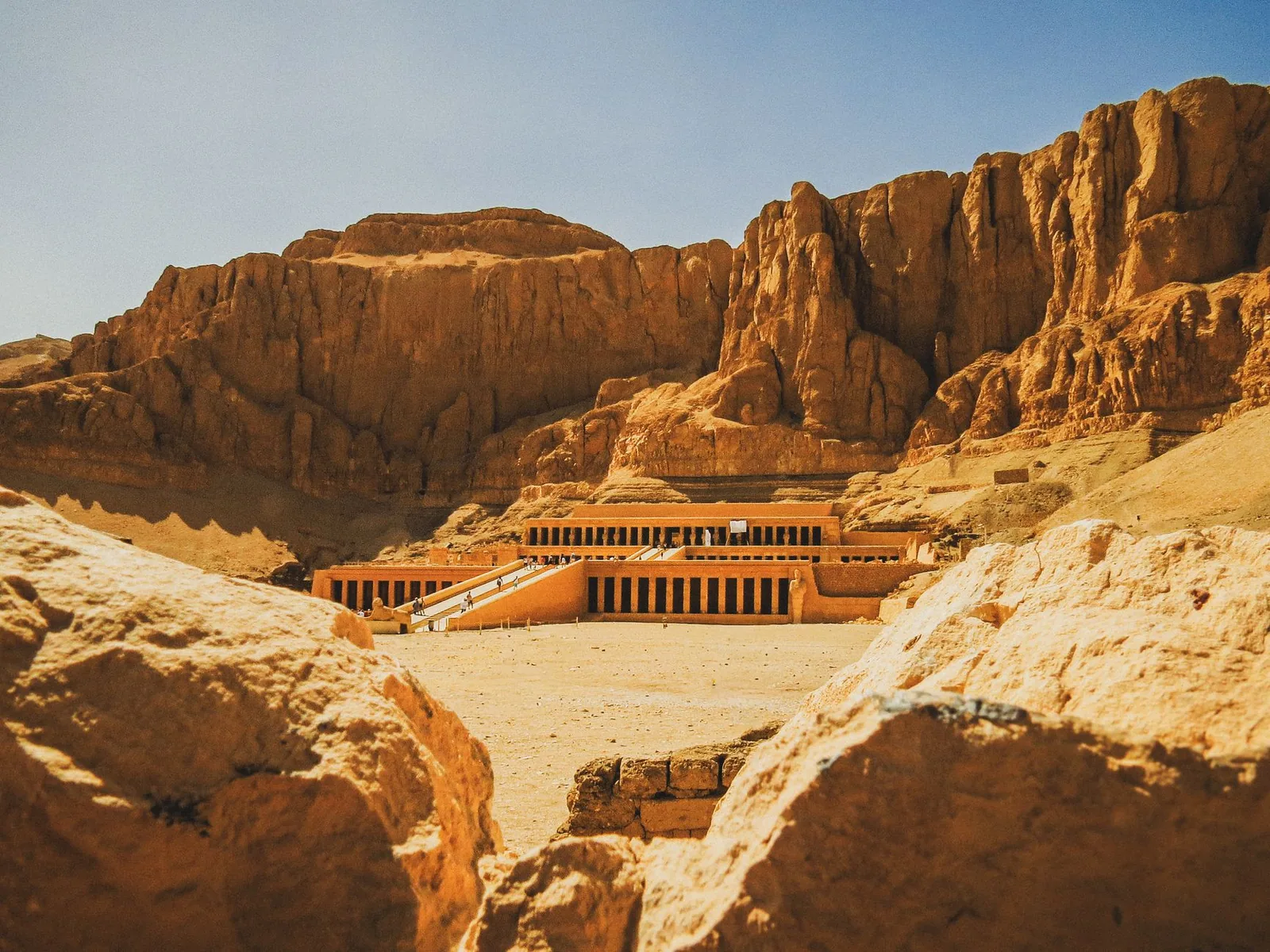
Timing matters more here than almost anywhere. The west bank bakes. From June through August the heat routinely pushes past 40C with almost no shade, and even in the mild winter high season the middle of the day is punishing. Go at opening, ideally soon after 6am, do the tombs first while the rock interiors are still cool, and carry far more water than you think you need. This is also why Egypt schedules its heavy conservation work for the quiet summer months. The current modernization drive, run by the Ministry of Tourism and Antiquities, is fitting Hatshepsut’s temple with a new visitor center, an interactive cinema, and eleven electronic ticketing gates in time for the winter crowds. Fresh signage and smoother entry are welcome, but they also signal that the west bank’s quietest days may be numbered, one more reason to track which sites are being upgraded and inscribed each year, as the 2026 World Heritage session in Busan underlined.
A last word on access and respect. These tombs mean steep stairs, low ceilings, and uneven ground, and Sennefer’s staircase in particular is not for anyone unsteady on their feet. Photography rules shift from tomb to tomb and flash is banned everywhere to protect the pigments, so buy a photo ticket where one is offered and follow the guards’ lead. Treat every painted wall as the fragile, three-thousand-year-old original it is.
Further reading (sources)
- Archaeology Magazine on the newly discovered New Kingdom tomb at Sheikh Abd el-Qurna
- Egypt Independent for Luxor’s high-tech visitor upgrades on both banks
- UNESCO World Heritage Centre with the inscription record for Ancient Thebes with its Necropolis
Feature Photo by Marc Ryckaert ( MJJR ), CC BY 3.0, via Wikimedia Commons.